
One of the fundamental steps to weight loss is to avoid foods made with flour such as all baked goods, pasta, breaded or battered foods and processed foods. Avoid also all grains – wheat, corn, rye, oats, barley, couscous, duran, arina, kamut, matzo, semilina, spelt and wheat germ.
Once a plant has been ground into a powder such as flour, it is absorbed into our system quickly thereby creating imbalances which the body works hard to overcome. Modern wheat has a gluteomorphin/gluten which is associated with irritable bowels and mood disorders. Grains contain lectins that cause gut leakiness resulting in inflammation in the body, auto immune diseases, and brain fog. Flour products include all baked goods, pasta, breaded or battered foods, processed foods, as well as ALL grains – wheat, corn, rye oats, barley, couscous, durum, arina, kamut, matzo, semolina, spelt, triticale, wheat germ. (See also https://en.wikipedia.org/wiki/Opioid_peptide)
Refined grains stimulate insulin to a greater degree than virtually any other food.
STEP 2: Another of the steps to weight loss is to reduce your consumption of added sugars
Sugar stimulates insulin secretion but it is far more sinister than that……
On a Banting weight loss diet, protein consumption should fall at 20% of daily calories.
STEP 4: Increase your consumption of natural fats
Dietary fat is least likely to stimulate insulin out of the macro nutrients, protein, fat and carbohydrates, thus it provides protection during a keto weight loss diet.
STEP 5: Increase your consumption of protective factors
Vinegar moderates blood sugar levels which is what we look for in a keto weight loss diet.
After water, tea is the most popular beverage in the world. The ketogenic weight loss diet can include tea. There are several basic tea varieties. Black tea is the most common, making up 75% of global consumption. Tea has its characteristic black colour. This is because the harvested leaves are fully fermented. Black tea tends to be higher in caffeine than other varieties. Semi-fermented Oolong tea undergoes a shorter period of fermentation.
Green tea is non-fermented
Instead the freshly harvested leaves immediatly undergo a steaming process to stop fermentation, giving green tea a much more delicate and floral taste. Green tea is naturally much lower in caffeine than coffee, amking this drink ideal to those who are sensitive to caffeine’s stimulating effects.
Green tea contains large concentrations of powerful antioxidants
Catechins are antioxidants in green tea. They may play a role in inhibiting carbohydrate-digestive enzymes resulting in lower glucose levels and protecting pancreatic beta cells. Fermentation (black tea) changes the catechins to a variety of theaflavins. Polyphenols in green tea area also believed to boost metabolism which may aid in fat burning.
Drinking green tea provides many health benefits
These include increased fat oxidation during exercise, increased resting energy expenditure and lower risk of various types of cancer. A meta-analysis of studies confirms that green tea helps with ketogenic weight loss although the benefit is rather modest: in the range of 2 -4 pounds (1 -2 kilograms). Studies include the Singapore Chinese Health Study, showed that tea drinking reduced the risk of type 2 diabetes by 14 to 18 percent.
All teas may be enjoyed as hot or cold beverages on the ketogenic weight loss diet
There are infinite varieties of tea available to suit any taste. Flavour can be added with the addition of lemon peel, orange peel, cardamom, vanilla pods, mint and ginger.
Herbal teas are infusions of herbs, spices or other plant matter in hot water. They make excellent drinks without added sugars. Some popular varieties include mint, chamomile, ginger, lavender, lemon balm, hibiscus and rose hip teas.
Enjoy tea in all it’s different styles as part of your ketogenic weight loss diet.
Coffee is healthy although due to its high caffeine content, coffee is sometimes condisered unhealthy. However, recent research has come to the opposite conclusion, perhaps due to the fact that coffee is a major source of antioxidants, magnesium and chlorogenic acid.
Coffee is healthy because it protects against type 2 diabetes
Coffee, even the decaffeinated version appears to protect against type 2 diabetes. In a 2009 review, each additional daily cup of coffee lowered the risk of diabetes by 7%, even up to six cups per day. The European Prospective Investigation into Cancer and Nutrition study estimated that drinking at least three cups of coffee or tea daily reduced the risk of diabetes by 42%.
The Singapore Chinese Health Study showed a 30% reduction in risk.
Coffee is healthy and reduces total mortality
Large scale studies found that most major causes of death, including heart disease, were reduced. Coffee may guard against neurologic diseases Altzheimers, Parkinsons disease, liver cirrhosis and liver cancer.
As a caution, while these correlation studies are suggestive, they are not proof of benefit. However, they suggest that coffee may not be as harmful as imagined.
Store your coffee beans well
Use an airtight container away from excessive moisture, heat and light. Flavor is lost quickly after grinding so investing in a reliable grinder is worthwhile. Grind beans immediately before brewing.
Iced coffee is easy and inexpensive to make
Simply brew a pot of regular coffee and cool it in the refrigerator overnight. You can cinnamon, coconut oil, vanilla extract, almond extract and cream to flavor your coffee without changing its healthy nature.
Replace addictive snacks with coffee in your weight loss diet
Dr. Robert Cywes recommends sipping on hot black coffee during your day, to avoid reaching for processed food snacks when you are Banting or on a keto diet.
Sugar-sweetened beverages are one of the leading sources of added sugars. This includes soda pop, sugar-sweetened teas, fruit juice, fruit punch, vitamin water, smoothies, shakes, lemonade, chocolate or flavoured milk, iced coffee drinks and energy drinks.
Beverages and hot drinks such as hot chocolate, mochaccino, cafe mocha and sweetened coffee and tea can also be included. Trendy alcoholic drinks add significant amounts of sugar to your diet, including such drinks as ‘hard’ lemonade, flavored wine coolers, cider beers as well as more traditional drinks such as Baileys Irish Cream, margaritas, daiquiris, pina coladas, dessert wines, ice wines, sweet sherries and liqueurs.
What about alcohol itself?
Alcohol is made from the fermentation of sugars and starches from various sources. Yeast eat the sugars and convert them to alcohol. Residual sugars result in a sweeter beverage. Sweetened dessert wines are obviously full of sugar and not recommended.
However, moderate consumption of red wine does not raise insulin or impair insulin sensitivity, and therefore may be enjoyed. Up to two glasses a day is not associated with major weight gain and may improve insulin sensitivity.
The alcohol itself, even from beer seems to have minimal effects on insulin secretion or insulin resistance. It is sometimes said that you get fat from the foods you eat when you drink alcohol, rather than the alcohol itself. There may be some truth to that although the evidence is sparse.
The advice to eat something, anything, as soon as you step out of bed is often heard, but we can make breakfast optional by downgrading it from ‘most important meal of the day’ to ‘meal’.
Different nations have different breakfast traditions. The big Amercian breakfast contrasts directly with French ‘petit jeuner’ or ‘small lunch’. The keyword here is ‘small.’
Breakfast foods are desserts in disguise
The greatest problem is, that like snacks, breakfast foods are often little more than desserts in disguise containing vast quantities of processed carbohydrates and sugar. One of the main ways to succeed with a Banting weight loss diet or a keto weight loss diet, is to forego sugar altogether.
Breakfast cereals, particularly those that target children are among the worst offenders. On average they contain 40% more sugar than those that target adults. Not surprisingly, almost all cereals for children contain sugar and ten of them contain more than 50% sugar by weight. Only 5.5 percent met the standard for ‘low sugar’. In diets of children under age eight, breakfast cereals rank only behind candy, cookies, ice cream and sugared drinks as sources of dietary sugar.
A simple rule to follow is this: Don’t eat sugared breakfast cereal or simply, make breakfast optional.
Bakery breakfast items
Many breakfast items from the bakery are highly problematic: muffins, cakes, banana bread and Danishes. Not only do they contain significant amounts of refined carbohydrates, they are often sweetened with sugars and jams. Bread often contains sugar and is eaten with sugary jams and jellies. Peanut butter often contains added sugar.
Traditional and Greek yogurts are nutritional foods. However, large amounts of sugar and fruit flavouring are added to commercial yoghurts.
Oatmeal is another traditional and healthy food. Whole oats and steel-cut oats are a good choice requiring long cooking periods because they contain significant amounts of fibre that requires heat and time to break down.
Avoid instant oatmeal. It is heavily processed and refined which allows for instant cooking and it contains large amounts of added sugar and flavors. Most of the nutritional value is gone.
While rolled oats and dried fruit granola attempt to disguise themselves as healthy, they are often heavily sugared and contain chocolate chips and marshmallows.
Eggs can be enjoyed
Eggs, previously shunned because of cholesterol concerns can be enjoyed in a variety of ways: scrambled, over easy, sunny side up, hard-boiled, soft-boiled, poached, etc.
Egg whites are high in protein, and the yolks contain many vitamins and minerals including choline and selenium. Eggs are particularly good sources of lutein, zeaxanthin, antioxidants that may help protect the eyes against macular degeneration and cataracts.
The cholesterol in eggs may actually help your cholesterol profile by changing the cholesterol particles to the larger, less atherogenic particles. Large epidemiologic studies have failed to link increased egg consumption with increased risk of heart disease.
Eat eggs because they are delicious, whole unprocessed foods.
Consider this: If you are not hungry, don’t eat at all.
The ‘healthy snack’ is one of the greatest weight loss deceptions. The myth that ‘grazing is healthy’ has attained legendary status. If we were meant to graze, we would be cows. Just don’t snack. Even as recently as the 1960’s people ate only three times a day. Constant stimulation of insulin leads to insulin resistance.
Pre-packaged snack foods have taken over our supermarket shelves.
Are snacks necessary? No. Simply ask yourself this question. Are you really hungry or just bored? Keep snacks completely out of sight.
If you have a snack habit replace that habit loop with one that is less destructive to your health. Perhaps a cup of green tea in the afternoon should be your new habit and will ensure success with your weight loss keto diet.
There’s a simple answer to the question of what to eat at snack time.
Nothing. Don’t eat snacks. Simplify your life. Period.
Most desserts are easily identified and eliminated from your weight loss diet. Desserts are mostly sugar with complimentary flavours added. Examples include cake, cookies, pudding, pies, mousses, ice cream, sorbets, candy and candy bars.
So, what can you do about desserts and weight loss?
Follow traditional societies by:
Have fresh, seasonal fruits, locally grown, with whipped cream
Have a small plate of nuts and cheeses
Dark chocolate with more than 70 percent cacao is a healthy treat
Chocolate is made from cocoa beans and does not naturally contain sugar. (However, most milk chocolate does contain large amounts of sugar.) Dark and semisweet chocolate contain less sugar than milk or white varieties.
Dark chocolate also contains significant amounts of fiber and anti-oxidants such as polyphenols and flavanols.
Studies on dark chocolate consumption indicate that it may help reduce blood pressure, insulin resistance and heart disease. Most milk chocolates are little more than candies with not enough cacao to offer benefit.
Nuts, in moderation, are another good choice for an after-dinner indulgence.
Most nuts are full of healthful, monounsaturated fats, have little or no carbohydrates and also contain fibre.
Macadamia, walnuts and cashews can all be enjoyed. Many studies show an association between increased nut consumption and better health, including reducing heart disease and diabetes.
Pistachio nuts, high in the antioxidant gamma-tocopherol and minerals such as manganese, magnesium, calcium and selenium, are widely enjoyed in the Mediterranean diet. A recent Spanish study found that adding 100 pistachio nuts to one’s daily diet, improved fasting glucose, insulin resistance and insulin levels.
Dessert is not to be taken every day and should be an occasional indulgence only.
If your goal is weight loss, your first major step is to severely restrict sugar.
To avoid added sugar is a fundamental step in weight loss. Dr. Jason fung makes this clear in his statement below.
“Obesity is a hormonal disorder of fat regulation. Insulin is the major hormone that drives weight gain, so the rational therapy is to lower insulin levels.” – Dr. Jason Fung
In the next several blog posts, I will lay them out for you.
For LCHF, Keto, Banting weight loss success, reduce your consumption of added sugars.
STEP 1: REDUCE YOUR CONSUMPTION OF ADDED SUGARS
SUGAR STIMULATES INSULIN SECRETION , but it is far more sinister than that. It contributes directly to insulin resistance in the liver and over time insulin resistance leads to higher insulin levels.
Many natural, unprocessed whole foods contain sugar, such as fructose in fruit and lactose in milk.
Naturally occurring and added sugars are distinct from one another. The two key differences are amount and concentration. Sugars are added to food during processing or cooking .
Why we need to avoid added sugar. What are the pitfalls?
Sugars may be added in unlimited amounts.
Also, sugar may be present in processed foods in much higher concentrations than in natural foods.
Sugar may be ingested by itself, which may cause people to overeat sugary treats, as there is nothing else within the food to make you feel “full”.
For these reasons, we need to avoid added sugar, rather than natural sugars in our diets.
Check all processed food labels to find out how much sugar there is in 1 serving of the product.
Here is the first step to doing that:
READ ALL LABELS ON PROCESSED FOODS
Almost ubiquitous in refined and processed foods, sugar is not always labeled as such. Other names include sucrose, fructose, maltose, dextrose, glucose, molasses, hydrolyzed starch, honey, invert sugar, cane sugar, high-fructose corn syrup, brown sugar, corn sweetener, rice/corn/cane/maple/malt/golden/palm syrup and agave nectar.
These aliases attempt to conceal the large amounts of added sugar.
If it comes in a package, it probably contains sugar.
Asking how much sugar is acceptable is like asking how many cigarettes are acceptable. Ideally, no added sugar at all would be best if you want to succeed with your weight loss keto diet.
In the next post, we will look at how to deal with deserts.
Reproduced from a Business Insider article, here are plenty of lower-carb grain alternatives to add to your plate. Not all of these will be available in your local food market, but some surely will be.
“The good news is that if you’re looking to limit your carb intake, there’s plenty of options for you — especially when it comes to replacing grains.” – Business Insider
So start experimenting.
Broccoli and cauliflower as lower-carb grain alternatives
Cauliflower rice is enjoyed on a LCHF Banting ketogenic diet.Broccoli is similar to cauliflower rice. Make riced broccoli easily using a box grater or a food processor. Quinoa is a nutritious alternative to rice and contains fifteen times less carbohydrate content. Avoid quinoa during your LCHF Banting Transformation weight loss phase but enjoy it in moderation when you have achieved Preservation.Delicious sweet potatoes are prebiotic vegetables and can be prepared in a myriad of different ways.If you’re lucky enough to get this cabbage turnip fusion at your vegetable market, then enjoy it as part of your Banting, low carb healthy fat diet for it’s anti-oxidant and extremely low carb, 9 grams of net carbs, benefits.The Japanese konjac plant is used to make Shirataki rice and noodles that have zero carbohydrates and calories, and zero gluten and soy. It is flavoured by the other ingredients in the meal. Get your konjac products at Wellness Warehouse. Butternut squash is another delicious side vegetable although I personally opt for pumpkin instead because it has half the number of carbohydrates that butternut has and is equally delicious. A South African favourite barbecue side is made with butternut. The pips are removed from butternut halves. Then fill the space with fried onions, garlic, chopped peppers and mozzarella cheese. These are then enclosed with aluminium foil and cooked on the barbecue grid.Super affordable, prebiotic vegetable cabbage rice only has five grams of carbohydrate per cup and can be used for anything as a lower-carb grain alternative.Delicious zucchini noodles have only six grams of carbohydrate per cup.
I sincerely admire home bakers who create beautiful Christmas confections. My prosaic low-carb Christmas bread and cookies baking suits me just fine.
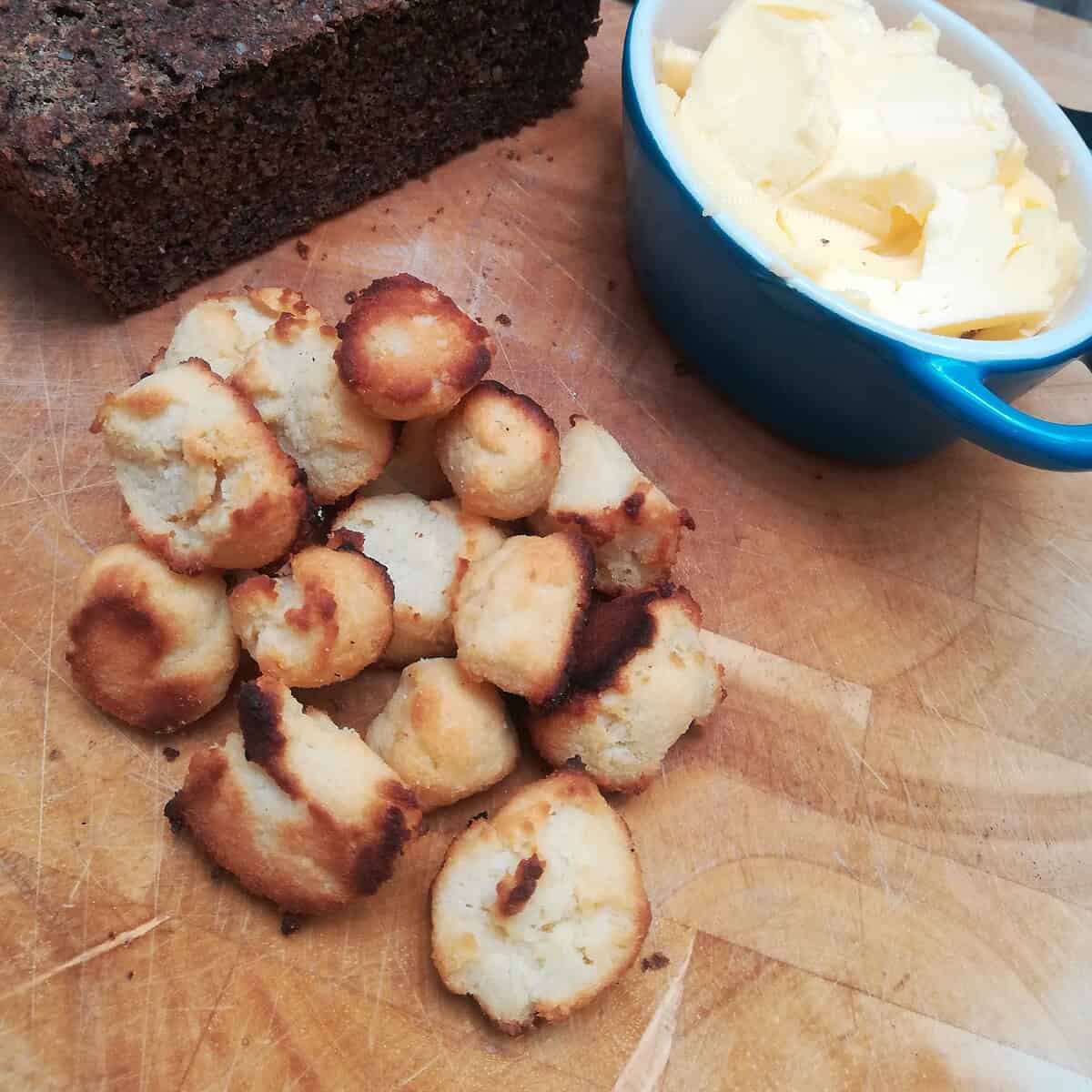
High days and holidays inspire me to try new recipes for low-carb bread and cookies. I’ve experimented with several low-carb bread recipes and Fiona’s Banting bread still comes out tops for me because it is delicious, really not difficult to make, has a great shelf life just keeping it in the fridge, and according to my calculations has 4.7 grams of carbohydrate per slice.
Often a few slices of this bread with some butter, cheddar cheese and slices of cucumber, constitutes a meal for me.
My grandchildren, and everyone else for that matter, enjoyed the chewy honey and coconut cookies that are dead easy and quick to make.
Here’s the recipe:
Chewy Honey And Coconut Cookies
Ingredients
3 tablespoons honey
90 grams butter
1 egg
1/4 cup milk
1 teaspoon vanilla extract
1 1/2 cups almond flour
1/2 cup desiccated coconut
In a mixer, cream together honey and butter until light and fluffy.
Add the egg, milk and vanilla and mix until combined.
Mix in the remaining ingredients to form a soft dough.
Chill the dough in the fridge for an hour.
Line a cookie sheet with silicone baking paper and roll the dough into 15 balls. Place them on the baking sheet and press them down with a fork, making sure they have enough room to spread.
Bake for 12 – 15 minutes in an oven preheated to 170 degrees C.
Cooks Note:
Go easy with these cookies as they each have 8 grams of carbohydrate. Only have them if you are in the keto maintenance phase.