Tribute to a mother who cooked

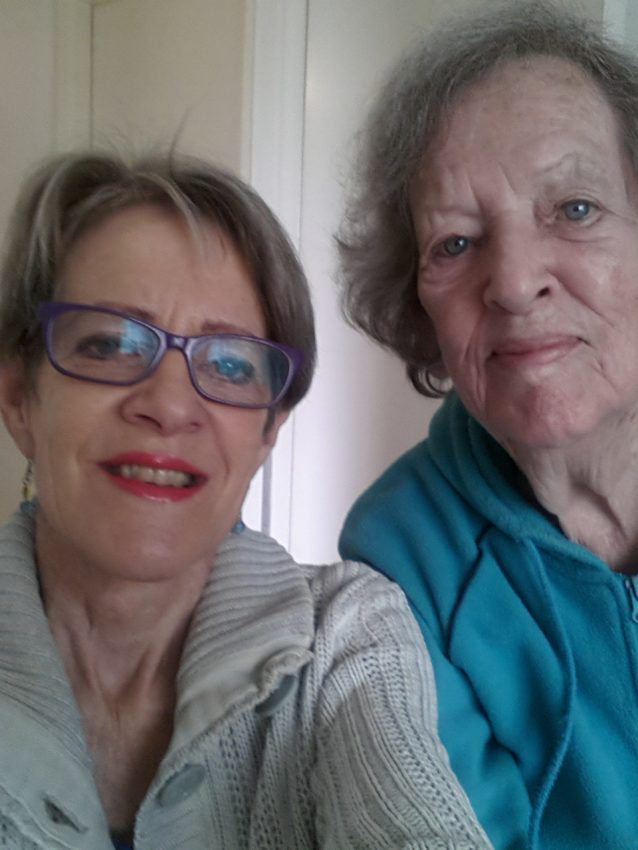
Two older women are posing for a selfie indoors, both smiling gently at the camera. One in glasses and red lipstick, the other in a blue hoodie, sharing their happiness after discovering keto weight loss success together.

A mother who cooked is my farewell, and have a good journey message to my precious mother, Pamela.

She was a parent who unconditionally loved her children and grandchildren, her siblings and her many friends. With them she shared a wide range of interests. These included gardening, dancing, reading, needlework and learning to speak Spanish. Also swimming, playing board games such as Scrabble, embossing copper-foil fine craft work, crosswords and playing tennis.

It became necessary for Mom to support herself financially from the age of forty onwards. This she did with great flare. She investing in property which ensured a healthy cashflow for her until the end of her life. It also provided a heritage for her heirs.

Mother was a world traveller of note. Itwas all done on the salary of a civil servant. She left behind delightful scrapbooks of mementos and photographs. Each item carefully hand-labelled, faithfully recording each trip.

Best of all though, mother cooked.

Daily family meals prepared from scratch with mostly locally-sourced, recognisable ingredients. The exception would be when she daringly cooked Chinese dishes.  For these she had to use canned, imported water chestnuts and bean sprouts. These dinners were served in traditional bowls and eaten with chopsticks.

Mother cooked the slow cooking way. There was no other way in South Africa during the 1950’s and 1960’s.  This resulted in shepherds’ pie; steak and kidney pie encased in flaky pastry. Sunday roasts with Yorkshire puddings, roast potatoes, and boiled, buttered green beans or fish fried in extra-light beer batter.

Undaunted, she produced home-baked bread and Cornish pasties out of her basically equipped kitchen. Toasted cheese and tomato sandwiches were created by placing the sandwiches, buttered on the outside, between sheets of kitchen paper. hen ironed, until the bread achieved the right degree of brownness.

Coming home from school on Friday afternoons was unforgettable because this was the weekly baking day.

The tins on the kitchen shelf were full. There was Scottish shortbread; iced chocolate-coconut biscuits; loaves of banana or date bread; coconut, oat and butter crunchies; a double layer chocolate cake or a tart with an almond filling.  

Her hand-written recipe book contained entries with titles like Mrs. Harbouth’s Sponge Cake, Grandma’s Christmas Cake and Sheila Mulligan’s Fudge. Recipes were passed around between friends and family.

All of this had an enduring influence on Mom’s offspring.

I took to baking in a big way to the neglect of mastering any other kind of food preparation. This resulted in my husband being offered for dinner, slices of cherry cake……. or a toasted sandwich ! (I have improved my skills over time.)

Here is what her progeny have achieved:

  • A son who is an avid Jamie Oliver aficionado and loves to get creative and tweak and create his own versions of the recipes.
  • A daughter who is a master baker and who currently provides home-cooked meals to about 15 toddlers in her private school
  • A granddaughter who provides daily cooked-from-scratch vegan and non-vegan dinners for her family, since having retired a few years back from owning and cooking in her restaurante in Alpujarra, Spain
  • A grandson, former private chef to the Canadian ambassador in Oslo, Norway and who is currently catering for unique events which includes recently cooking dinner for the Norwegian prime minister, Erna Solberg and her entire cabinet
  • Another grandson whose preferred way to relax is to try out new Vietnamese dishes to share with his wife and children
  • A grandson who often cooks his family pancakes with compote; curries and pasta bakes, even homemade bread
  • A granddaughter whose current life in France has resulted in her learning to make beef bourguignon; cheese soufflé; octopus pie; baked camembert and more
  • Finally, an eleven year old great-grandson who eagerly delves into Jamie Oliver’s 5 Ingredients cookbook, Quick and Easy Food, making treats like orange and dark chocolate shortbread

This Mother’s gift of nourishing and loving with food has become a legacy that has been passed down through the generations.

Dear Mom, may the meals be scrumptious, may the chefs be handsome.

Now’s the time to leave the cleaning up to someone else.

Photo credit: Myself

Editing credit: Rachel Van Blerk

Prepare for weight loss

Illustration of a human stomach and intestines filled with clusters of variously colored bacteria, representing the gut microbiome and its connection to keto weight loss against a soft, abstract background.

As you prepare for weight loss recall what Hippocrates said in 400 BC: “All diseases begin in the gut.”

Gut problems as you prepare for weight loss

Hippocrates may not have been entirely right.  Current medical thinking is increasingly emphasising the importance of the intestines. There are links between digestion, mood and health. According to the Real Meal Revolution, many Banters who are heavier and insulin resistant appear to have poor gut health.

In my own case, I know this to be true as I had digestive problems for decades. Then I began to prepare for weight loss. I began to feed my gut biome and eliminate harmful substances. As a result, my depression and anxiety disappeared.  Stable, upbeat moods replaced depression and anxiety.

Here’s what we know for sure about this enormous organ:

  • It is considered to be “the second brain”
  • The small intestine is responsible for around 95% of the digestion and absorption of the food we eat.
  • The total surface area exposed to both the nutritious and harmful things we consume has been calculated to be anywhere from the size of  a badminton court to the size of a tennis court!
  • Key to the effective and healthy functioning of the small intestine is the symbiotic relationship it enjoys with our gut flora. These trillions of microorganisms line the intestinal wall. They form a vital living interface between the partially digested food on the inside and the intestinal wall on the outside.
  • Gut flora manufacture vitamins B and K, and act as an organ of the body by releasing hormones into the bloodstream. (As we have seen, hormones interact with the brain and signal the body to change its behaviour in response to a change in its environment. Irritable bowel syndrome, IBS and other bowel problems such as constipation and bloating are now thought to directly affect our mood, contributing to emotional shifts and even anxiety and depression.)
  • Our gut flora also plays an important hand in managing the body’s metabolism and it forms part of the body’s immune system by making antigens from potentially harmful bacteria that the immune system can use to ward off disease.

It is critical that it should take into account the healthy development and maintenance of your gut flora.

Avoid abrupt changes

Avoid abrupt changes, such as a wildly fluctuating diet.

The excessive use of antibiotics or the infestation of harmful bacteria, can seriously compromise this vital organ. Rebuilding and supporting the gut flora should be regarded as a foundational step to metabolic health.

For more on gut health read…….

Gluten Freedom by Alessio Fasano (Wiley, 2013) or find his videos on YouTube.

References:

Real Meal Revolution Banting 2.0 by Jonno Proudfoot and the Real Meal Revolution Team, (Burnet Media, 2016)

Do you struggle when dining out?

Eight people sit around a wooden table with plates of food, salad, bread, and drinks, raising their glasses in a toast. The friendly atmosphere shows how easy it is to stay keto during holidays while enjoying time together.

What should I order when dining out in a restaurant without low-carb, healthy-fat options?

Advice from The Real Meal Revolution on low-carb dining out goes like this:

Keep your meals simple when eating out. Go for unprocessed proteins and veg like steak or fish with butter and broccoli.

A major priority is to consciously avoid the extras like sauces, soft drinks, alcohol, dessert.

  • Main meal salads are a good option; e.g. chicken Ceasar salad. I order this without the dressing and ask for extra-virgin olive oil to be brought to the table. I remove the bread croutons.
  • Ask for additional salad with other meals.
  • Swap potatoes, French fries, rice, noodles for vegetables or a salad.
  • Ask the waiter to take away the bread basket. I ask for a dish of olives instead.
  • Avoid anything “breaded” like schnitzels and crumbed veal.
  • Sushi: opt for sashimi or a Japanese salad with salmon or tuna.
  • Indian: be wary of the potatoes in curries, not to mention the rice. Avoid poppadums and naan bread. When I order curry I ask for it to be served in a bowl with no side dish.
  • Thai: a coconut milk broth with chicken or prawns or a Tom Yum soup is a good choice. Stay away from spring rolls, dim sum, rice and noodle dishes.
  • As always, avoid all soft drinks. Rather order sparkling water.
  • Be aware of your alcohol intake. Make a conscious decision beforehand, about how much, if anything,  you’re going to drink. Start the meal with a big glass of still or sparkling water. If necessary, ask the waiter not to fill your glass. If you need a reason not to drink, claim to be the designated driver for others in the party.