
Low-carb myths – “Just count calories”

A man wearing a red apron stands in a modern kitchen with his arms crossed, smiling. Behind him are shelves filled with jars, and in front are fresh vegetables and keto weight loss ingredients on the counter.

More common sense around low-carb myths from Jonno Proudfoot, CEO of the Real Meal Revolution, Chef and extreme adventurer.

The idea that weight loss is simply a matter of “just count calories” is a widespread myth that oversimplifies a complex biological process. While calorie intake does matter—creating a calorie deficit (burning more calories than consumed) is essential for weight loss—the quality and source of those calories are equally important.

Processing calories

This myth assumes that all calories are equal, but our bodies don’t process 100 calories of vegetables the same way as 100 calories of sugary snacks. Foods high in refined sugars and unhealthy fats can spike insulin, increase cravings, and lead to overeating, while nutrient-dense foods like lean proteins, vegetables, and whole grains promote satiety and stable blood sugar levels.

Moreover, focusing solely on calorie counting ignores critical factors like hormones, metabolism, gut health, sleep, stress, and physical activity. For example, chronic stress can elevate cortisol levels, making it harder to lose weight even in a calorie deficit. Similarly, lack of sleep disrupts hunger hormones like ghrelin and leptin, often leading to increased appetite and poor food choices.

Disordered eating habits caused by low-carb myths

The “just count calories” low-carb myths approach can also lead to disordered eating habits. People may become obsessed with numbers, ignore hunger and fullness cues, or restrict calories too severely, slowing down metabolism and causing muscle loss rather than fat loss.

Sustainable weight loss involves more than a math equation. It requires a holistic approach that includes mindful eating, balanced nutrition, regular physical activity, and lifestyle adjustments tailored to individual needs. While calorie awareness can be a useful tool, it should be part of a broader strategy that promotes overall health and well-being—not just numbers on a label. Ignoring the complexity of weight loss can set people up for frustration, yo-yo dieting, and long-term health consequences.

Is low-carb an expensive and elitist way of eating?

A large gold bar placed on a white plate with a fork and knife on either side, humorously symbolizing the rewards of keto weight loss—turning dietary dedication into pure gold.

One of the greatest beliefs around is that “Low-Carb is Expensive”. – Jonno Proudfoot.

There is a common misconception that academics and scientists are the only people whose opinions count in any argument. When I dipped my toe into the academic community I was appalled by how much arguing happens over scientific papers instead of looking at what is right in front of them. There are many debates about nutrition that can be won on pure personal experience, and often, as little as plain old common sense.

One of the greatest beliefs around low-carb is that ‘Low-Carb is EXPENSIVE

Pasture-reared, wild-caught and organic foods

Suzanne Garrett, one of our own Facebook followers, testified to this by her own admission when she commented on our post with the following:

‘Agree with these comments, heard them all. But it is expensive to buy pastured/wild caught/organic/minimally processed. No getting around that fact – it’s a matter of degrees of expensive and how to economize by buying seasonally and in bulk. Still very expensive’

I have to agree with Suzanne. Pasture-reared, wild-caught and minimally processed food is generally more expensive.

What does low-carb mean?

Low-carb, by definition says nothing about pasture-reared or wild-caught. Sure, all nutrition experts (hopefully even those who are not pro-low-carb), would advocate pasture reared meat and organic produce for optimal health. But in the history of Real Meal Revolution there has only ever been one mention of the quality of ingredients and that was in the first book The Real Meal Revolution. It said something along the lines of “you should aim to eat pasture reared and organic as much as possible.”

We still believe that that is where you should aim. But it is totally unsustainable for almost everyone on earth. Posh meat is expensive. Organic veggies are expensive. Most of these foods are also very hard to get hold of.

Low-Carb doesn’t mean low-carb, super elite, organic, grass-fed or that the ingredients need to have been flown in on the wings of a condor. Quality aside, there are also some tag-along health hacks that have been added to the low-carb ‘must-haves’ that don’t quite line up. Himalayan crystal salt as opposed to normal salt is one that kills me. If we’re trying to save the environment by shortening the distance from pasture-to-plate, using Himalayan crystal salt is like asking Mother Earth to smoke a Texan Plain every time you salt your avocado.

Real Meal Revolution recipes

Low-carb also doesn’t mean eating only Real Meal Revolution recipes either. That would be delicious, but that too is unsustainable for every meal of the day, every day of the week. Unless, you’ve got a private chef, in which case I recommend giving it a try.

While the recipes in Real Meal Revolution’s cook books show case a few high-end dinner options, they should not be mistaken for prescriptive dietary advice. The recipes were developed to illustrate how deliciously one could eat on a low-carb diet. If you skip the duck with berry coulis and coconut pancakes it will not negatively effect your journey to awesome weight.

Low-carb means low-carb and nothing else. That means eating very few carbs. End of story. And you can do that without any recipes, without any expensive ingredients and without lots of money.

What is nowhere near as expensive as a private chef or elite produce is simply lowering carbs and sticking to the green list. And that is what low-carb is about. If you can just eat of the green list, you are doing low-carb (hint – low-carb also doesn’t mean ‘high-fat’ but we will save that one for later)

So, Suzanne, we understand and share your concerns in a big way. But you don’t need all that fancy stuff to lower your carbs.

Low-carb is expensive = Myth

Reference: Jonno Proudfoot, app.realmealrevolution.com

Top 10 Tips for LCHF weight loss if you’re over 40

A woman with reddish hair in a ponytail, wearing a blue and black striped swimsuit, stands at the shore facing the ocean on a bright, clear day, enjoying her success on her keto weight loss journey.

If this is happening to you, you are not alone. Over 40 million women in the US are estimated to be going through menopause.  This usually occurs between ages 49 and 52. This article is about how to manage weight loss if you are over 40.

Going through menopause?

Many women find in the years leading up to and after their final menstrual period that along with other symptoms their abdomens thicken and their weight increases.

We have come up with nine other actions, along with intermittent fasting, that may help stop menopausal weight issues. They will give a boost to weight loss if you are over 40 and  experiencing a plateau while low-carb keto eating.

Don’t eat too much protein

Women need less protein and can much more easily over-consume protein compared to men. If you and your husband are eating the same size steak, you are consuming too much. Too much protein interferes with ketosis and fat burning,

General advice from our group of experts is to eat between 0.5 to 1.5 g of protein per kilogram of body weight per day. A 70 kg (154 lbs) woman would therefore eat no more than 105 g of protein per day, and perhaps significantly less.

Don’t eat too much fat

Once fat adapted, cut back on extra fat: One of the great joys of low-carb keto eating is adding back fat into our bodies after denying them fat for so long. But a keto diet is not carte blanche to gorge yourself on fat, the experts note. If you want to lose weight, you have to burn your own fat stores for energy, not consume all the energy you need by eating fat. So stop the bulletproof coffee and fat bombs for now. You will know you are fat adapted because you can go a long time without eating.

Intermittent fasting

Once you are fat-adapted, hunger pangs diminish and it is easy to go for longer periods without eating. Many people naturally stop eating breakfast — they just aren’t hungry when they wake up. The number one rule of low-carb eating is eat when you are hungry and stop when you are full.

So if you are not hungry, try fasting for 16 hours, and then eating just lunch and dinner in an 8-hour window, called a 16:8 fast. Or try eating dinner one night, than fasting until dinner the next night, doing a 24-hours fast.

Watch out for the carb creep

If you have been doing low-carb keto eating for a while, carbs can sneak back into your diet, particularly in the form of sauces, condiments, fruits and nut snacks. If weight loss has stalled, closely examine what you are eating and cut back to under 20 g of carbs again. Nut snacks like cashews, almonds, and pistachios are easy to overeat and can contain enough carbs to contribute to a weight-loss stall. A cup of pistachios, for example, has 34 g of carbs. Avoid carb cycling or cheat meals, too, for now.

Cut out alcohol

To be successful with weight loss if you are over 40 cut out the alcohol for now: Many people love the fact that on a low-carb or keto diet you can have a glass of dry white or red wine from time to time. If you are experiencing a weight-loss plateau, or gaining weight, cut out all alcohol for now until weight loss starts again. Even a few drinks a week can cause a stall

Avoid sweeteners

If you have been including artificial sweeteners like aspartame or sucralose in your low-carb or keto diet, our experts recommend you wean yourself off them.

Do weight training

The more muscle you add, the better your insulin sensitivity, so any sort of resistant strain you can add to your muscle is great for weight loss. The weight lifting doesn’t have to be a excessive — 90 seconds, twice a week can do it. It has to be a heavy enough weight that after about to 10 to 15 lifts (reps) you cannot do another rep. That is called lifting to muscle failure.

While you can’t exercise your way out of a bad diet, adding in weight lifting will build muscle and increase your metabolism.

Get enough sleep

A good night sleep reduces stress and cortisol, the stress hormone that when raised hangs onto abdominal fat.

Tips for better sleep include:

  • Sleep in a cool, dark room.
  • Wear ear plugs and eye shades.
  • Limit screen time and blue light before bed (or try the glasses that block blue light.
  • Go to bed and get up at the same time each day.
  • Stop drinking coffee by noon and limit caffeine consumption in all forms.
  • Avoid alcohol before bed.
  • Get exposure to natural daylight each day.

Reduce stress

When we see people struggle and hit a plateau, or completely fall off the wagon, the number one cause is a life crisis of some sort. We all have life crises, all our lives are managed chaos.

We recommend people plan coping mechanisms to deal with stress such as yoga, meditation and mindfulness techniques, relaxing walks or other pleasant diversions and hobbies. For a week eat slowly and mindfully, where you really pay attention to taste, textures, and hunger cues.

Be realistic

Some women are aiming for an arbitrary number on a scale… a number that has no real bearing or relationship to their actual health and wellness. It’s far better to enjoy whole food LCHF that results in great energy, focus, good GI tract and healthy muscles, skin and hair.

Age with grace and vitality.

Reference:

Anne mullens published on Diet Doctor

Photo credit: Artem Bali, Unsplash
Do you ever have stress or gut issues?

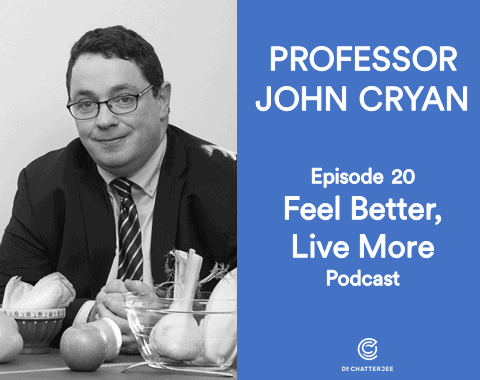
A man in a suit and tie sits at a table with vegetables, exploring topics like keto weight loss. Text reads: PROFESSOR JOHN CRYAN. Episode 20 Feel Better, Live More Podcast. The Dr Chatterjee logo is at the bottom.

“Lifestyle changes can positively affect our gut microbiome and influence how we deal with stress.”

Introduction to podcast with Professor John Cryan

Dr Chatterjee talks to Professor John Cryan, world-leading researcher on the gut-brain axis and Professor of Anatomy & Neuroscience about how the connection between our gut and our brains affects all aspects of our health, including stress, depression, anxiety and IBS.

Listen here

Episode Highlights:

  • As a neuroscientist, how did John become to research stress, which led to its link to the Gut Microbiome?
  • Hear about the progress John and his team have made so far with their research.
  • What chronic illnesses to John & Rangan now know can affect and be affected by stress?
  • John & Rangan talk about stress and why our body reacts in this way and the follow-on effects of chronic stress.
  • Listen to the research John has done recently on how specific bacterium in the gut, can be more resistant to stress.
  • Link to John’s book The Psychobiotic Revolution: Mood, Food and the New Science of the Gut-Brain Connection
  • John talks about how our microbiome is different throughout our lives from first born to old age, from person to person and compared to our ancestors.
  • John describes the Gut-brain Axis and how we have recently been able to see how the gut can directly influence activities in the brain.
  • How has John’s research shown how the state of the microbiome can cause specific stress responses such as depression & anxiety?
  • Hear John’s tips to improving gut health include: a Mediterranean diet, fermented foods, pre-biotics in the diet, avoiding processed food and anti-biotics, how Caesarean sections and having pets can have an effect and why good sleep practises and exercise are important.
  • John talks about research into processed foods, sugar and artificial sweeteners.
  • John reveals how certain medications, prescribed by doctors, can be more or less effective depending on the individual’s microbiome.

Reference:

https://drchatterjee.com/blog/category/podcast/


Dr Chatterjee talks to Professor John Cryan, world-leading researcher on the gut-brain axis and Professor of Anatomy & Neuroscience about how the connection between our gut and our brains affects all aspects of our health, including stress, depression, anxiety and IBS.

Jamie Oliver – ambush on childhood obesity

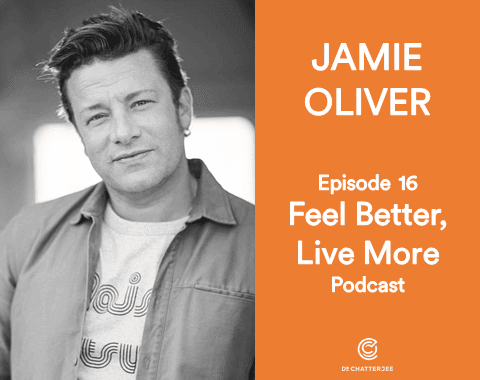
Black-and-white photo of a man with styled hair and a casual jacket. Next to him, orange text reads: JAMIE OLIVER Episode 16—discussing keto weight loss—Feel Better, Live More Podcast, with a small logo at the bottom.


Dr. Rangan Chatterjee is a leading lifestyle and health teacher. His podcasts are well worth listening to. Dr Chatterjee talks to celebrity TV chef, restaurateur and childhood obesity campaigner Jamie Oliver on his ambitions as a boy working in his family’s business, his current role as an obesity campaigner and what he’s working on for the future.

Jamie Oliver on Childhood Obesity

Jamie Oliver, the British celebrity chef and food campaigner, has long been an outspoken advocate for improving children’s health through better nutrition. He has described childhood obesity as one of the most serious health issues facing the modern world. According to Oliver, poor diet is not only contributing to obesity but also to rising cases of type 2 diabetes, heart disease, and other preventable conditions in children.

Oliver has been especially critical of the widespread availability of ultra-processed foods, sugary drinks, and unhealthy school meals. He believes that governments, schools, and food manufacturers have a shared responsibility to protect children from poor dietary influences. In his campaigns, he has repeatedly called for clearer food labeling, sugar taxes, and restrictions on junk food advertising. He also wants better nutrition education in schools.

In the UK, his “Feed Me Better” campaign led to reforms in school dinners, aiming to replace processed foods with healthier alternatives. More recently, he has supported policies to ban the promotion of junk food before 9pm on television. He argues that children are especially vulnerable to marketing tactics.

Oliver has emphasized the importance of cooking skills. He suggests that teaching children and families how to prepare nutritious meals can empower them to make better food choices. He argues that food education should be a core part of the school curriculum, just like math or science.

While Oliver’s campaigns have faced pushback from some food industry groups and political figures, he continues to be a passionate voice for public health. He believes that tackling childhood obesity requires bold action, cultural change, and sustained commitment from all parts of society. His ultimate message is clear: healthy children are the foundation of a healthy future.

Hormonal health – Would you like to optimise it? ?

A smiling woman stands at a fruit market holding a grapefruit. Beside her is the cover of The Balance Plan: Six Steps to Optimize Your Hormonal Health by Angelique Panagos, which highlights keto weight loss and features the same woman.


Dr. Rangan Chatterjee is a leading lifestyle and health teacher. His podcasts are well worth listening to. In this interview with Angelique Panagos, nutritional therapist and the author of The Balance Plan: Six Steps to Optimize Your  Hormonal Health, you will learn:

  • How have Angelique’s own experiences led her to learning about health and writing a book?
  • Why do Angelique and Rangan believe stress has a big role to play in modern health concerns?
  • Why does Angelique believe passionately that good nutrition is a vital part of healthy hormones?
  • How does Angelique think that your sleep pattern affects your hormones?
  • Find out Angelique’s six steps to optimising health.

Modern life and hormonal health

“Modern  life is attacking us. Ten years ago, there was a switch off between our work lives and our personal lives – we don’t have that anymore.” – Dr. Rangan Chatterjee


What are Angelique’s six steps to hormonal health?

Angelique Panagos, a nutritional therapist specializing in hormonal health, outlines six essential steps to optimize hormone balance. Her approach is rooted in holistic nutrition and lifestyle practices aimed at restoring equilibrium in the endocrine system. Here’s a summary of her six steps:

  1. Balance Blood Sugar: Angelique emphasizes that fluctuating blood sugar levels can wreak havoc on hormones, particularly insulin, cortisol, and sex hormones. She advocates for a nutrient-dense diet that includes healthy fats, quality proteins, fiber-rich vegetables, and complex carbohydrates to maintain stable blood sugar throughout the day.
  2. Support the Gut: A healthy gut is crucial for hormone regulation. Panagos encourages the consumption of fermented foods, prebiotics, and a diverse range of plant-based foods to support digestion and gut flora. Poor gut health can impair estrogen detoxification and contribute to inflammation.
  3. Love Your Liver: The liver plays a key role in metabolizing hormones, especially estrogen. Angelique recommends reducing alcohol, caffeine, and processed foods while incorporating liver-supportive foods like cruciferous vegetables, garlic, and lemon water to help the liver function efficiently.
  4. Reduce Stress: Chronic stress leads to elevated cortisol levels, which can suppress reproductive hormones and contribute to hormonal imbalances. Panagos suggests mindfulness practices, adequate rest, and setting boundaries to manage stress more effectively.
  5. Improve Sleep: Quality sleep is vital for hormonal repair and balance. She encourages establishing a regular sleep routine, limiting screen time before bed, and creating a restful sleep environment to support melatonin and overall endocrine function.
  6. Clean Up Your Environment: Exposure to endocrine-disrupting chemicals in cosmetics, plastics, and cleaning products can interfere with hormonal health. Panagos advocates switching to natural, non-toxic alternatives to minimize this risk.

These six steps work synergistically to promote balanced hormones and overall wellbeing, aligning with Panagos’ philosophy of sustainable, holistic health.

Follow this link to hear the podcast

Reference:

Dr. Rangan Chatterjee

Angelique Panagos

Type 2 Diabetes Devastation

Type 2 Diabetes

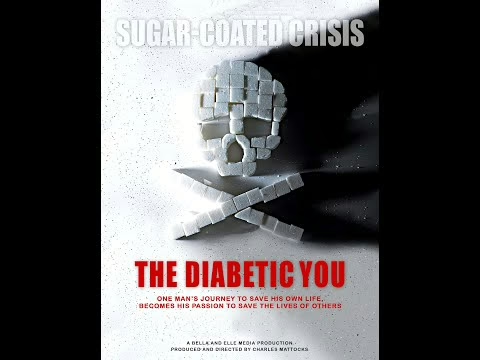
 Those afflicted with type 2 diabetes will die at greatly increased rates from heart disease; stroke; kidney disease and diabetic coma. A first sympton is that eyesight will deteriorate. Nerve damage will occur and teeth will decay and fall out. Limbs will be amputated because of foot ulcers and gangrene. Diabetes causes six out of ten amputations.

To get a sense of how ghastly this disease epidemic is, watch this two-minute clip from the documentary that is available to watch on YouTube.

This condition is a highly complex health condition with many possible treatment options. In recent years, very-low-carbohydrate diets that include frequent intermittent fasting have emerged as a way to not only treat type 2 diabetes, but also reverse it. Whether reversing type 2 diabetes is possible is highly contentious among medical professionals and scientists. There is certainly more acknowledgment that “pausing” diabetes or putting it “in remission” is possible.

Jason Fung, Canadian Nephrologist

Jason Fung, a Canadian nephrologist, believes unequivocally that, yes,  it can be reversed. His book, The Diabetes Code: Prevent and Reverse Type 2 Diabetes Naturally, is an instruction manual on just how to do it. The book begins with a detailed history and explanation of how this condition has become the epidemic of the 21st century. It also explains why conventional treatments (including drugs) simply do not work. It is well accepted that drugs cannot work alone. Diet and exercise are cornerstones of diabetes management. Fung explains exactly why and how nutrition should be the foremost focus.

Type 2 diabetes is started by insulin resistance. Doctor Jason Fung, who features in the documentary, uses longer fasting periods to lower insulin levels in his patients. This allows the body to recover from insulin resistance. But in order to avoid hunger from fluctuating blood sugar levels, the patient is first weaned off refined carbohydrates and started on the healthy fat low carbohydrate diet.

The researchers found that practicing this type of fasting for 30 days raised the levels of certain proteins. These can improve insulin resistance and stave off the adverse effects of a diet rich in fats and sugar.

By adapting to a LCHF Banting lifestyle, we reverse insulin resistance, and even Type 2 Diabetes.

Halle Berry shares her diet secrets

Halle Berry

Halle Berry explains a ketogenic diet in the clearest, simplest way. Who can not get it?

Halle Berry and the Keto Diet: A Star’s Secret to Staying Fit

Halle Berry, the Oscar-winning actress known for her age-defying beauty and impressive physique, is a long-time advocate of the ketogenic (keto) diet. At 50+, Berry credits this low-carb, high-fat lifestyle for helping her manage diabetes and maintain her health and fitness.

Type 1 diabetes diagnosis

Diagnosed with type 1 diabetes at age 22, Berry later discovered that keto could help stabilize her blood sugar levels. The keto diet works by forcing the body into a state of ketosis, where it burns fat for energy instead of carbohydrates. For Berry, this not only helped her control insulin levels but also supported her fitness goals and enhanced mental clarity.

Her typical keto-friendly meals include healthy fats like avocado, coconut oil, and olive oil, along with moderate protein and leafy greens. She avoids sugar, bread, and processed carbs. Berry often shares glimpses of her meals and fitness routines on social media, inspiring fans to take a healthier approach to eating.

Fitness Training

In addition to her diet, Berry works with personal trainer Peter Lee Thomas to maintain a rigorous workout routine that includes strength training, boxing, and yoga. She emphasizes that the combination of keto and consistent exercise has helped her feel younger and more energized.

Halle Berry’s dedication to the keto lifestyle has made her a strong role model for others looking to improve their health, particularly those managing chronic conditions like diabetes. While keto may not be for everyone, Berry’s success story shows that with discipline and the right support, significant benefits can be achieved.

As always, anyone considering a major dietary change should consult with a healthcare provider. But for Halle Berry, keto has proven to be more than a trend—it’s a long-term solution for health and vitality.

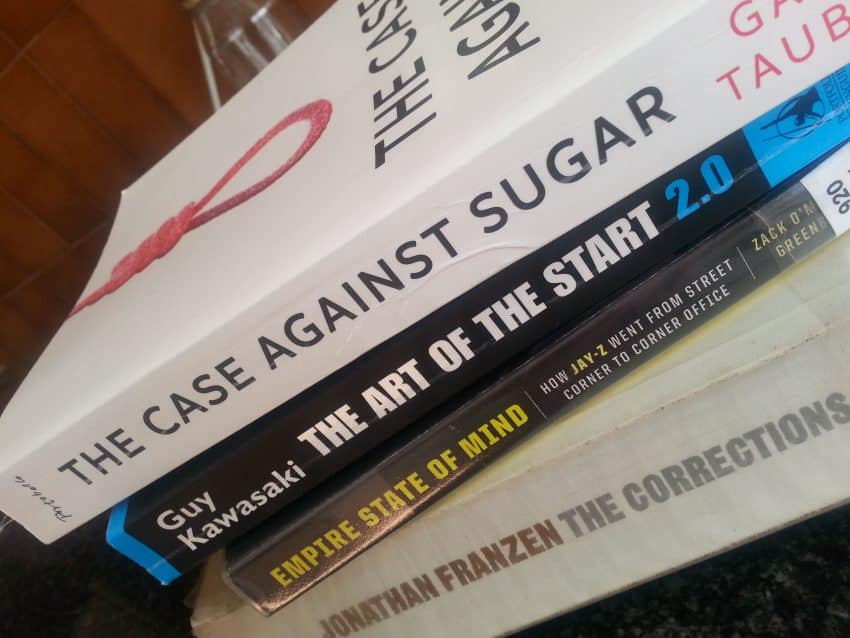
What I’m reading – The Case Against Sugar by Gary Taubes

A close-up of a stack of books including The Case Against Sugar—perfect for anyone interested in keto weight loss—alongside The Art of the Start 2.0, Empire State of Mind, and The Corrections on a dark surface.

Gary Taubes includes this statement by the U.K. chancellor of the exchequer in his latest book.

“I am not prepared to look back at my time here in this Parliament, doing this job, and say to my children’s generation: I’m sorry, we knew there was a problem with sugary drinks, we knew it caused disease, but we ducked the difficult decision and we did nothing.”

– George Osborne, U.K. chancellor of the exchequer, announcing a tax on sugary beverages, March 16, 2016

I’m a huge fan of Gary Taubes, an award-winning science and health journalist, with three Science in Society Journalism Awards from the National Association of  Science Writers, and is the recipient of a Robert Wood Johnson Foundation Investigator Award in Health Policy Research. Gary is co-founder of the Nutrition Science Initiative. When I first began my journey into low carb, healthy fat living, Gary’s books Why We Get Fat: And What To Do About It and Good Calories, Bad Calories, made it all plain for me. He has also written Bad Science: The Short Life and Weird Times of Cold Fusion as well as Nobel Dreams: Power, Deceit and the Ultimate Experiment.

Gary Taubes’ introduction

In his introduction to The Case Against Sugar, Gary says the following:

The purpose of this book is to present the case against sugar – both sucrose and high-fructose corn syrup – as the principal cause of the chronic diseases that are most likely to kill us, or at least accelerate our demise, in the twenty-first century. Its goal is to explain why these sugars are the most likely suspects, and how we arrived at the current situation: a third of all adults are obese, two-thirds overweight, almost one in seven is diabetic, and one in four to five will die of cancer; yet the prime suspects for the dietary trigger of these conditions have been, until the last decade, treated as little worse than a source of harmless pleasure.

After studying Gary’s case for the prosecution, which begins with the early domestication of sugar in New Guinea about ten thousand years ago; the discovery of sugar crystals by Indian farmers in 500 B.C.; it’s distribution to China and Japan by Buddhist missionaries; carried by the Muslim expansion into the Mediterranean countries; the further introduction by Columbus into the New World, and ends with the modern times, where Americans currently eat between 150 lbs and 170 lbs of sugar per person annually; where half a billion adults and 40 million children on the planet are obese, and diabetes is a worldwide epidemic, there can be little doubt that the hypothesis is correct.

The Case Against Sugar is a challenging read with a bibliography that extends to 35 pages and with 281 notes, but, in my opinion is well worth the effort.

Conclusion

Gary’s earlier books helped change the way I eat but The Case Against Sugar disturbs deeply. In its pages I learned:

  • That sugar and tobacco are married. Who would know that soaking Virginia and Burley in a sugar sauce would encourage inhalation of smoke from blended cigarettes, and addiction. Gunpowder and nuclear weapons have killed fewer people.
  • That sugar and slavery went hand in hand. When Muslims began growing sugar in the Middle East in the seventh century, they imported black slaves from East Africa to work the fields.
  • That the present epidemic of obesity, diabetes, gout, heart disease, cancer is probably not possible to reverse.

Published: Portobello Books, 2016

ISBN 978 1 84627 637 8

Photo credit: Myself

Do you struggle when dining out?

Eight people sit around a wooden table with plates of food, salad, bread, and drinks, raising their glasses in a toast. The friendly atmosphere shows how easy it is to stay keto during holidays while enjoying time together.

What should I order when dining out in a restaurant without low-carb, healthy-fat options?

Advice from The Real Meal Revolution on low-carb dining out goes like this:

Keep your meals simple when eating out. Go for unprocessed proteins and veg like steak or fish with butter and broccoli.

A major priority is to consciously avoid the extras like sauces, soft drinks, alcohol, dessert.

  • Main meal salads are a good option; e.g. chicken Ceasar salad. I order this without the dressing and ask for extra-virgin olive oil to be brought to the table. I remove the bread croutons.
  • Ask for additional salad with other meals.
  • Swap potatoes, French fries, rice, noodles for vegetables or a salad.
  • Ask the waiter to take away the bread basket. I ask for a dish of olives instead.
  • Avoid anything “breaded” like schnitzels and crumbed veal.
  • Sushi: opt for sashimi or a Japanese salad with salmon or tuna.
  • Indian: be wary of the potatoes in curries, not to mention the rice. Avoid poppadums and naan bread. When I order curry I ask for it to be served in a bowl with no side dish.
  • Thai: a coconut milk broth with chicken or prawns or a Tom Yum soup is a good choice. Stay away from spring rolls, dim sum, rice and noodle dishes.
  • As always, avoid all soft drinks. Rather order sparkling water.
  • Be aware of your alcohol intake. Make a conscious decision beforehand, about how much, if anything,  you’re going to drink. Start the meal with a big glass of still or sparkling water. If necessary, ask the waiter not to fill your glass. If you need a reason not to drink, claim to be the designated driver for others in the party.