Cook Something – Saag Paneer

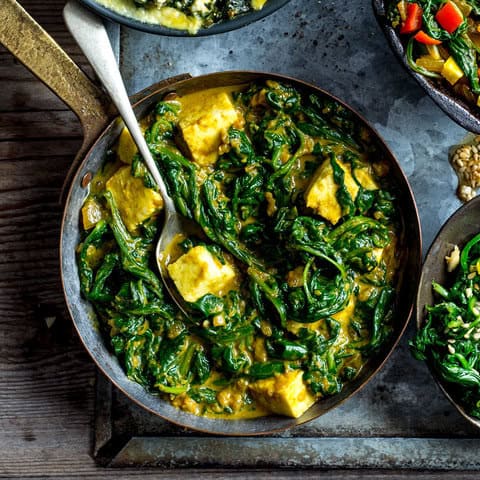
A skillet filled with creamy spinach and paneer curry—a keto weight loss dish—features vibrant green spinach leaves and golden paneer cubes in a rich, spiced sauce, with a spoon resting inside.

Saag Paneer originated in Punjab, a state in Northern India. It has been described as luscious creamed spinach. This saag paneer recipe serves two and takes 25 minutes to prepare.

Ingredients

  • 150 g spinach (chopped)
  • 60 g paneer (cut into 1.5cm cubes)
  • ¹⁄₂ tsp tumeric
  • ¹⁄₄ tsp cayenne pepper
  • ¹⁄₄ tsp salt
  • 2¹⁄₂ tbsp extra virgin olive oil
  • ¹⁄₂ medium onion (finely chopped)
  • ¹⁄₂ tbsp ginger (minced)
  • 2 cloves garlic (minced)
  • ¹⁄₂ whole green chilli (finely chopped)
  • ¹⁄₄ tsp garam masala
  • 1 tsp ground coriander
  • ¹⁄₂ tsp ground cumin
  • ¹⁄₄ cup plain yoghurt
  • ¹⁄₂ pinch salt and pepper

Method for making saag paneer

  1. In a large pan, get the olive oil up to a medium heat and add the onions, gingergarlic and chilli and saute for 10 minutes until well caramelised.
  2. Now, add the garam masala, coriander and cumin and cook for about 5 minutes.
  3. Then, add the spinach and stir well, tossing to coat the leaves in the spices
  4. Once mixed, add half a cup of water and cook uncovered until the water has completely reduced.
  5. Remove the mix from the heat and stir in the yogurt, 1 tbsp at a time.
  6. Finally, add in the paneer, season to taste with salt and pepper and mix gently on a low heat until serving. If it gets too hot, the yoghurt will split so be careful.

Reference:

Real Meal Revolution

Cook something – Cottage Pie

A glass baking dish filled with a casserole, perfect for keto weight loss, is topped with a generous layer of shredded cheddar cheese and placed on a dark countertop.

Similar to lasagne, cottage pie is a favourite comfort food. This is a low-carb, keto-friendly version of cattage pie.

Ingredients

For the mince

400 g beef mince
125 g streaky bacon
40 g butter
1 large onion
4 medium celery sticks
3 cloves garlic
50 g tomato paste
1 sprigs thyme
200 g button mushrooms
1 tin tomatoes
1 sprigs origanum
¹⁄₄ L beef stock

For the cauli-mash topping

1 medium cauliflower
100 g butter
2 large egg yolks
1 pinch nutmeg
About 100 g grated cheddar cheese

Method

For the mince

  1. In a medium-sized, heavy-based frying pan, sauté the beef mince and streaky bacon in the butter until golden brown.
  2. Finely chop the onion and roughly chop the celery sticks.
  3. Once the mince has browned remove the meat, leaving the fat in the pan, and add the onion and celery.
  4. Sauté the onion and celery in the fat until golden brown. Add the minced garlic and sauté until aromatic.
  5. Return the mince to the pan. Add the tomato paste and stir until a dark sediment collects on the base of the pot (this sediment gives the mince an amazing roasted flavour).
  6. Add the beef stock, chopped thymebutton mushrooms and tinned tomatoes and simmer on a low heat for about an hour to cook and reduce.
  7. Add the chopped origanum and season to taste with salt and pepper.

For the cauli-mash topping

  1. Steam the cauliflower until it goes mushy.
  2. Place the cauliflower in a food processor and purée until smooth.
  3. While the blender is running, add the egg yolks.
  4. Add in the butter, one knob at a time until it has melted and the mixture is smooth.
  5. Season with nutmeg to taste.

To make the cottage pie

  1. Fill a lasagne/pie dish with the mince and smooth it out.
  2. Top it with the cauliflower purée.
  3. Top with the grated cheddar cheese or just leave with the cauli-mash topping only.
  4. Place it under the grill for 15 minutes until golden brown.

Cook’s Tip

This recipe serves four people and can be made ahead of time.

I prefer to use my own homemade stock in the recipe.

Reference:

app.realmealrevolution.com

Photo credit: My own

Cook something – Keto Almond & poppy seed bread

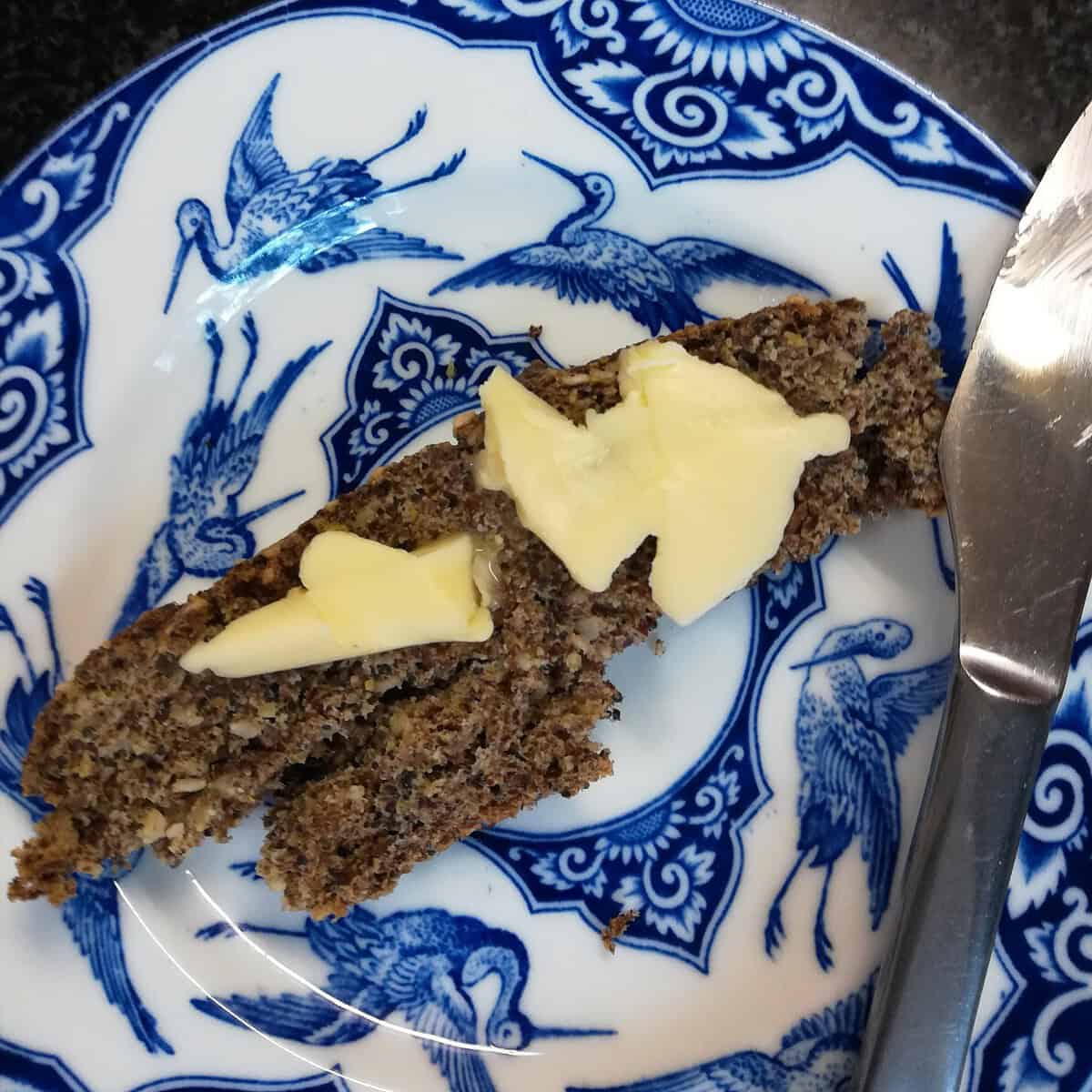
A slice of dark bread with several pieces of butter on top, served on a blue and white plate decorated with bird designs—an ideal treat for those interested in keto weight loss. A butter knife rests on the right side of the plate.

I’ve baked many different low carb breads but almond and poppy seed bread is the quickest and easiest to make.

Almond and poppy seed bread

It has 5.3 grams carbohydrate per slice.

It keeps well in the fridge. Or separate the slices with baking paper and freeze them in a plastic bag or container.

These breads all taste much better toasted than they do raw.

Ingredients

4 extra large eggs
3 tbsp water
1 cup golden flax seeds (grind them yourself in a coffee grinder)
¹⁄₂ cup ground almonds
1 tsp baking powder
1 teaspoon salt
5 ml caraway seeds
5 millimeter xylitol
¹⁄₂ tsp xanthan gum
2 tbsp poppy seeds
¹⁄₄ cup sunflower seeds
¹⁄₄ cup flaked almonds

Method

  1. Preheat the oven to 180°C / 350°F.
  2. You must buy whole golden flax seeds and grind them yourself otherwise the recipe will not work.
  3. Grease a small loaf tin and also line it with baking paper as this bread sticks to the pan.
  4. Whisk together the eggs and the water in a bowl until well combined.
  5. Place the rest of the ingredients in another bowl and stir to combine.
  6. Fold the eggs into the dry ingredients and mix well.
  7. Pour the mixture into the greased loaf tin and bake in the oven for 30 – 35 minutes.
  8. Allow to cool and serve.
  9. This loaf will last for a few days in the fridge.

Cook’s Tip

Toasted cheese and tomatoes are epic! Poppy seeds usually go pretty well with a squeeze of lemon, so I reckon go toasted with lashings of butter and avo!

Reference:

Photo credit: My own

LCHF foods that I love to eat – coconut kefir and papaya

A white bowl filled with chunks of papaya topped with a generous dollop of yogurt, perfect for keto weight loss, with a metal spoon resting in the bowl, placed on a black patterned surface.

Consuming fermented foods such coconut kefir, and drinks like kombucha, has been widely reported for centuries to be of benefit. This is advocated by doctors and health specialists globally. Also of benefit to the gut biome are foods like papaya that are rich in digestive enzymes.

I recommend one portion of either a broth or a fermented food every day; the latter can be either a half cup of a fermented drink or a tablespoon of fermented vegetables. it will be a bit weird to start. But once you’ve done it for a day or two, it will grow on you and you should start craving it.

Coconut Milk Kefir

This takes only 12 hours to ferment, Unless you prefer a more sour taste. Then you simply leave it to ferment for longer until the taste appeals to you.

So, how do you make kefir at home?

  • Get kefir grains from your local health food store.
  • Using only plastic or wooden utensils, place the grains into a glass or plastic container.
  • Pour over a 400 ml tin of coconut milk. Stir to combine the kefir grains and the coconut milk.
  • Leave at room temperature for 12 hours.
  • Remove the kefir grains and place in a plastic container, covered with some of the new kefir. Place in the fridge where it will become dormant until you make your next batch.
  • Store your new batch of kefir in the fridge where it will become thicker the longer you leave it there.

Coconut kefir with papaya – high in digestive enzymes

Other foods that contain digestive enzymes are:

  • Avocado oil
  • Macadamia oil
  • Extra virgin olive oil
  • Coconut oil
  • Pineapple

Conclusion

Make a point of having fermented foods or drinks and foods rich in digestive enzymes several times a week.

Reference:

Real Meal Revolution Banting 2.0

Top 10 Tips for LCHF weight loss if you’re over 40

A woman with reddish hair in a ponytail, wearing a blue and black striped swimsuit, stands at the shore facing the ocean on a bright, clear day, enjoying her success on her keto weight loss journey.

If this is happening to you, you are not alone. Over 40 million women in the US are estimated to be going through menopause.  This usually occurs between ages 49 and 52. This article is about how to manage weight loss if you are over 40.

Going through menopause?

Many women find in the years leading up to and after their final menstrual period that along with other symptoms their abdomens thicken and their weight increases.

We have come up with nine other actions, along with intermittent fasting, that may help stop menopausal weight issues. They will give a boost to weight loss if you are over 40 and  experiencing a plateau while low-carb keto eating.

Don’t eat too much protein

Women need less protein and can much more easily over-consume protein compared to men. If you and your husband are eating the same size steak, you are consuming too much. Too much protein interferes with ketosis and fat burning,

General advice from our group of experts is to eat between 0.5 to 1.5 g of protein per kilogram of body weight per day. A 70 kg (154 lbs) woman would therefore eat no more than 105 g of protein per day, and perhaps significantly less.

Don’t eat too much fat

Once fat adapted, cut back on extra fat: One of the great joys of low-carb keto eating is adding back fat into our bodies after denying them fat for so long. But a keto diet is not carte blanche to gorge yourself on fat, the experts note. If you want to lose weight, you have to burn your own fat stores for energy, not consume all the energy you need by eating fat. So stop the bulletproof coffee and fat bombs for now. You will know you are fat adapted because you can go a long time without eating.

Intermittent fasting

Once you are fat-adapted, hunger pangs diminish and it is easy to go for longer periods without eating. Many people naturally stop eating breakfast — they just aren’t hungry when they wake up. The number one rule of low-carb eating is eat when you are hungry and stop when you are full.

So if you are not hungry, try fasting for 16 hours, and then eating just lunch and dinner in an 8-hour window, called a 16:8 fast. Or try eating dinner one night, than fasting until dinner the next night, doing a 24-hours fast.

Watch out for the carb creep

If you have been doing low-carb keto eating for a while, carbs can sneak back into your diet, particularly in the form of sauces, condiments, fruits and nut snacks. If weight loss has stalled, closely examine what you are eating and cut back to under 20 g of carbs again. Nut snacks like cashews, almonds, and pistachios are easy to overeat and can contain enough carbs to contribute to a weight-loss stall. A cup of pistachios, for example, has 34 g of carbs. Avoid carb cycling or cheat meals, too, for now.

Cut out alcohol

To be successful with weight loss if you are over 40 cut out the alcohol for now: Many people love the fact that on a low-carb or keto diet you can have a glass of dry white or red wine from time to time. If you are experiencing a weight-loss plateau, or gaining weight, cut out all alcohol for now until weight loss starts again. Even a few drinks a week can cause a stall

Avoid sweeteners

If you have been including artificial sweeteners like aspartame or sucralose in your low-carb or keto diet, our experts recommend you wean yourself off them.

Do weight training

The more muscle you add, the better your insulin sensitivity, so any sort of resistant strain you can add to your muscle is great for weight loss. The weight lifting doesn’t have to be a excessive — 90 seconds, twice a week can do it. It has to be a heavy enough weight that after about to 10 to 15 lifts (reps) you cannot do another rep. That is called lifting to muscle failure.

While you can’t exercise your way out of a bad diet, adding in weight lifting will build muscle and increase your metabolism.

Get enough sleep

A good night sleep reduces stress and cortisol, the stress hormone that when raised hangs onto abdominal fat.

Tips for better sleep include:

  • Sleep in a cool, dark room.
  • Wear ear plugs and eye shades.
  • Limit screen time and blue light before bed (or try the glasses that block blue light.
  • Go to bed and get up at the same time each day.
  • Stop drinking coffee by noon and limit caffeine consumption in all forms.
  • Avoid alcohol before bed.
  • Get exposure to natural daylight each day.

Reduce stress

When we see people struggle and hit a plateau, or completely fall off the wagon, the number one cause is a life crisis of some sort. We all have life crises, all our lives are managed chaos.

We recommend people plan coping mechanisms to deal with stress such as yoga, meditation and mindfulness techniques, relaxing walks or other pleasant diversions and hobbies. For a week eat slowly and mindfully, where you really pay attention to taste, textures, and hunger cues.

Be realistic

Some women are aiming for an arbitrary number on a scale… a number that has no real bearing or relationship to their actual health and wellness. It’s far better to enjoy whole food LCHF that results in great energy, focus, good GI tract and healthy muscles, skin and hair.

Age with grace and vitality.

Reference:

Anne mullens published on Diet Doctor

Photo credit: Artem Bali, Unsplash

Do you ever have stress or gut issues?

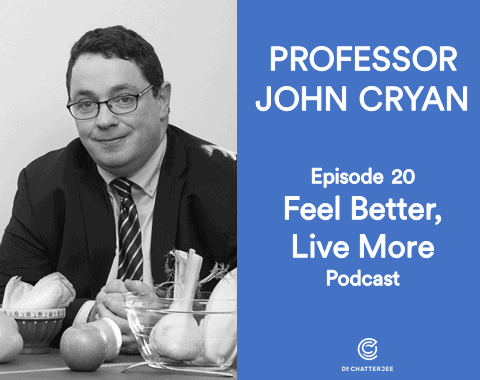
A man in a suit and tie sits at a table with vegetables, exploring topics like keto weight loss. Text reads: PROFESSOR JOHN CRYAN. Episode 20 Feel Better, Live More Podcast. The Dr Chatterjee logo is at the bottom.

“Lifestyle changes can positively affect our gut microbiome and influence how we deal with stress.”

Introduction to podcast with Professor John Cryan

Dr Chatterjee talks to Professor John Cryan, world-leading researcher on the gut-brain axis and Professor of Anatomy & Neuroscience about how the connection between our gut and our brains affects all aspects of our health, including stress, depression, anxiety and IBS.

Listen here

Episode Highlights:

  • As a neuroscientist, how did John become to research stress, which led to its link to the Gut Microbiome?
  • Hear about the progress John and his team have made so far with their research.
  • What chronic illnesses to John & Rangan now know can affect and be affected by stress?
  • John & Rangan talk about stress and why our body reacts in this way and the follow-on effects of chronic stress.
  • Listen to the research John has done recently on how specific bacterium in the gut, can be more resistant to stress.
  • Link to John’s book The Psychobiotic Revolution: Mood, Food and the New Science of the Gut-Brain Connection
  • John talks about how our microbiome is different throughout our lives from first born to old age, from person to person and compared to our ancestors.
  • John describes the Gut-brain Axis and how we have recently been able to see how the gut can directly influence activities in the brain.
  • How has John’s research shown how the state of the microbiome can cause specific stress responses such as depression & anxiety?
  • Hear John’s tips to improving gut health include: a Mediterranean diet, fermented foods, pre-biotics in the diet, avoiding processed food and anti-biotics, how Caesarean sections and having pets can have an effect and why good sleep practises and exercise are important.
  • John talks about research into processed foods, sugar and artificial sweeteners.
  • John reveals how certain medications, prescribed by doctors, can be more or less effective depending on the individual’s microbiome.

Reference:

https://drchatterjee.com/blog/category/podcast/


Dr Chatterjee talks to Professor John Cryan, world-leading researcher on the gut-brain axis and Professor of Anatomy & Neuroscience about how the connection between our gut and our brains affects all aspects of our health, including stress, depression, anxiety and IBS.

Jamie Oliver – ambush on childhood obesity

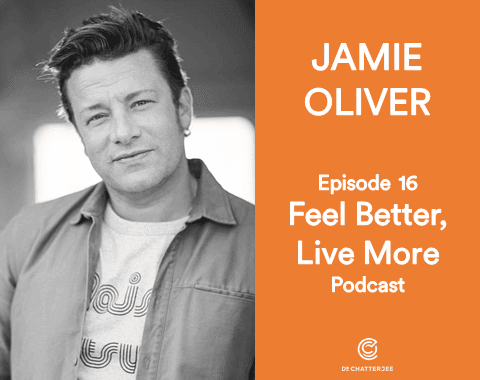
Black-and-white photo of a man with styled hair and a casual jacket. Next to him, orange text reads: JAMIE OLIVER Episode 16—discussing keto weight loss—Feel Better, Live More Podcast, with a small logo at the bottom.


Dr. Rangan Chatterjee is a leading lifestyle and health teacher. His podcasts are well worth listening to. Dr Chatterjee talks to celebrity TV chef, restaurateur and childhood obesity campaigner Jamie Oliver on his ambitions as a boy working in his family’s business, his current role as an obesity campaigner and what he’s working on for the future.

Jamie Oliver on Childhood Obesity

Jamie Oliver, the British celebrity chef and food campaigner, has long been an outspoken advocate for improving children’s health through better nutrition. He has described childhood obesity as one of the most serious health issues facing the modern world. According to Oliver, poor diet is not only contributing to obesity but also to rising cases of type 2 diabetes, heart disease, and other preventable conditions in children.

Oliver has been especially critical of the widespread availability of ultra-processed foods, sugary drinks, and unhealthy school meals. He believes that governments, schools, and food manufacturers have a shared responsibility to protect children from poor dietary influences. In his campaigns, he has repeatedly called for clearer food labeling, sugar taxes, and restrictions on junk food advertising. He also wants better nutrition education in schools.

In the UK, his “Feed Me Better” campaign led to reforms in school dinners, aiming to replace processed foods with healthier alternatives. More recently, he has supported policies to ban the promotion of junk food before 9pm on television. He argues that children are especially vulnerable to marketing tactics.

Oliver has emphasized the importance of cooking skills. He suggests that teaching children and families how to prepare nutritious meals can empower them to make better food choices. He argues that food education should be a core part of the school curriculum, just like math or science.

While Oliver’s campaigns have faced pushback from some food industry groups and political figures, he continues to be a passionate voice for public health. He believes that tackling childhood obesity requires bold action, cultural change, and sustained commitment from all parts of society. His ultimate message is clear: healthy children are the foundation of a healthy future.

LCHF foods that I love – grilled sardines

Two grilled whole fish garnished with chopped herbs and garlic, served on a blue plate with oil and sea salt—a delicious, keto weight loss–friendly meal.

Grilled sardines may not enjoy the popularity of other fish, but they’re one of the most nutrient-dense foods on the planet.

What are they?

These small, nutritious cousins of the herring family are eaten whole and provide plenty of omega-3 fatty acids.

They’re named after the Italian island of Sardinia, where records show that they were caught there as early as the 15th century.

Sardines are extremely nutritious and contain almost every major nutrient

Have a look at this list of 9 good reasons to eat sardines:

  • Sardines are a rich source of bio-available calcium which is an essential mineral for skeletal and dental health. Vegan dieters and those who follow a strict paleo, dairy-free diet, set themselves up for calcium deficiency.
  • One of the best health boosts that eating sardines can provide, are essential Omega 3 fatty acids,  EPA (eicosapentaenoic acid) and DHA (docosahexaenoic acid). These provide anti-inflammatory protection against many chronic diseases.
  • Sardines are incredibly rich in Vitamin D. Vitamin D is a hormone rather than a vitamin. The ultraviolet rays of the sun reacting on our skin produce Vitamin D. For those living in the Northern hemisphere the winters are dark and long. It is essential to obtain Vitamin D from a good food source.
  •  If we are looking for a way to increase our protein intake, then sardines are the answer.  The essential amino acids in protein are needed synthesize hormones, grow and repair body cells and they also make us feel satisfied after eating.
  • Selenium is a mineral that acts as an antioxidant in the body. It also plays a role in DNA repair and the proper functioning of the endocrine and immune systems.
  • Sardines contain an insignificant amount of mercury, and they are among the cleanest fish in the ocean.
  • Sardines are affordable to everyone.
  • Both fresh and canned sardines are very convenient, nutritious and good for health.
  • When we take a total view of everything these fish provide, it is even more impressive;

Sardines provide more calcium than a cup of whole milk.

An alternative source of selenium to brazil nuts.

The same omega-3 fatty acids as mackerel and salmon.

A protein content almost equivalent to chicken breast.

More than two thirds of the RDA for vitamin D.

Reference:

Nutrition Advance.com

Turmeric and curcumin

A glass of yellow turmeric drink, perfect for keto weight loss, sits on a dark countertop with spices floating on top. A box labeled Turmeric Refill is partially visible behind the glass.

There have been thousands of peer-reviewed articles indicating the benefits of turmeric and curcumin, and various studies report that curcumin is more effective than some prescription drugs at tackling inflammation.

Why turmeric?

  • Massive anti-inflamatory and anti-cancer properties
  • Aids digestion
  • Helps to reduce blood-sugar levels, thus lowering the risk of diabetes and insulin resistance.
  • Associated with the relief of symptoms of depression, arthritis, high cholesterol and chronic pain

How much?

Try to add turmeric to you diet at least three times a week.

A regular turmeric capsule is also an option.

Disclaimer:  Curcumin may interfere with anti-coagulants like Clopidogrel, Aspirin and Warfarin. It also can affect medications such as non-steroidal, anti-inflammatory drugs. If you are taking any chronic medications or suffer from any chronic medical conditions, speak to your healthcare provider before introducing large amounts of turmeric into your diet.

Making Golden Shake

Have your Golden Shake cold if making it with kefir (so as not to kill off the bacteria), or warm or cold if you’re making it with coconut milk.

Ingredients

  • 1 cup kefir (cold only) or coconut milk (warm or cold)
  • 1/2 teaspoon turmeric
  • 1/4 teaspoon Ceylon cinnamon
  • 1 teaspoon chia seeds
  • 1/2 teaspoon maca powder
  • a crack of black pepper
  • a pinch of crystal salt
  • 1/2 teaspoon honey (optional)

Method

Warm the milk on the stove if you’re making the warm version.

Combine all the ingredients and blend, in descending ease of use, in a Nutribullet or with any other blender.

Golden shake with turmeric, curcumin, maca powder, cinnamon, salt and black pepper.

My best way to enjoy turmeric

In a glass of warm water, mix in a tablespoon of fresh lemon juice, half a teaspoon of turmeric and a crack of black pepper.

Reference:

Real Meal Revolution Banting 2.0 by Jonno Proudfoot and the Real Meal Revolution Team, (Burnet Media, 2016)