Type 2 Diabetes Myths vs Facts

Type 2 diabetes myths
Home » LCHF lifestyle
  • Type 2 diabetes myths number one is that it won’t happen to me.
  • Type 2 diabetes only affects older adults.
  • Only heavier people get type 2 diabetes.
  • Type 2 diabetes isn’t that big of a deal. Just take the medicine.
  • You can’t reverse or improve type 2 diabetes.
  • It’s estimated that type 2 diabetes in US youth has recently increased by 30%.
  • Diabetes is an indication of carbohydrate intolerance. People with low body fat are not necessarily immune.
  • Diabetes and it’s complications (including cardiovascular disease and kidney failure) are among the leading causes of death in the US.
  • Using an ultra-low carbohydrate diet, it is possible to reverse type 2 diabetes.
  • Statistics about type 2 diabetes are grim.
  • Fortunately, turning things around is as simple as as adopting a low-carb or keto diet.

Hear Professor Tim Noakes Speaking On The Proper Human Diet

Prof Tim Noakes, the proper human diet.

Prof Tim Noakes says this about the proper human diet.

“By evolution or creation, humans were designed to eat fat and protein.”

Alec Hogg invited Prof Tim Noakes to speak about the proper human diet with Alec Hogg on BizNews.

Professor Timothy Noakes

Prof Noakes was born in Harare, zimbabwe in 1949. As a youngster he had a keen interest in Sport and attended the Diocesan College in Cape Town. Following this he studied at the University of Cape Town (UCT) and obatained a MBChD in 1974, an MD in 1981 and a DSc (Med) in Exercise Science in 2002.

In the early ’90’s Noakes teamed up with Morne’ Du Plessis to drive the founding of the Sports Science Institute Of South Africa (SSISA). The institute was built to provide a facility that would primarily fund research in sports performance. The application of this research would provide sports personnel of all disciplines with the means to improve. Noakes and Du Plessis also wanted to use it as a platform to build public interest in the country’s top sports people and build state pride.

Achievements

Prof Noakes has published more than 750 scientific books and articles. He has been cited more than 21,000 times in scientific literature and has an H-index of 77. He has won numerous awards over the years and made himself available on many editorial boards. For the final 15 years of his academic career he was rated an A1 scientist – the highest possible rating indicating a world-leading scientist – by the South African National Research Foundation.

Prod Tim Noakes is the co-founder and Chief Medical Director of the Nutrition Network. He devotes the majority of his time to promoting the low carbohydrate high fat diet (LCHF) also known as the proper human diet. This is especially beneficial to those with insulin resistance. He raises funds and does research through The Noakes Foundation. Prof Tim Noakes also supports Eat Better South Africa.

He is highly acclaimed in his field. Prof Noakes is now in his seventies is still physically active. He does CrossFit twice a week and competes in the CrossFit Open. He is a devoted husband, father and grandfather, and now in his retirement, is enjoying spending more time with his family.

Credits

BizNewsTV

Obesity Awareness: Identifying The Culprit

A lit round bomb surrounded by pizza, burgers, fries, and fried chicken symbolizes the danger of unhealthy eating and the struggle to deal with food pushers tempting you with junk food.

The multi-billion dollar question is “What is making us fat?” Obesity awareness will help us to identiy the culprit so that we can begin by starting to eat low carbohydrate real foods.

There are two main theories (5):

 The Calories-In-Calories-Out (CICO) model. This model states that we get fat because we eat more calories (energy) than we burn. This is based on the first law of thermodynamics which states that the energy in a closed system cannot be created or lost but rather only transferred from one form to another. Based on this, the energy from all types of food and nutrients (fat, protein, or carbohydrate) can be quantified and will be processed similarly within the body, irrespective of their source.

Expend more energy

And the only way to lose or burn this energy is by expending more energy for example by exercising more). Indeed, people do lose weight when starved of calories, or when exercising excessively while concurrently reducing food intake. But these situations aren’t sustainable.

The trouble with the CICO model

The trouble with the CICO model is that 1.) As humans are not closed systems because energy can be sequestered into embargoed compartments (e.g. adipose tissue [body fat]) or dissipated variably, and importantly, 2.) Because the body regulates the fate of the nutrients that come in, by choosing whether they should be stored as fat or make us hungry or full, or make us want to move or exercise (expend energy) more or less.

Nutrients are not created equal

Therefore the types of nutrients (or sources of calories) affect how they are processed (metabolised). As such, nutrients, and the calories they contain, are not created equal, and this model fails, as the body’s drives eventually beat the sheer willpower exerted to get us to simply eat less (limit calories). The result means that we just regain any weight lost.

2. The insulin or endocrine model

This model proposes that obesity is caused by a diet that promotes a fat-storing hormonal environment. In other words eat low carbohydrate real foods as science journalist and researcher, Gary Taubes explains:

“carbohydrates are singularly responsible for prompting insulin secretion; 2)because insulin is singularly responsible for inducing fat accumulation; 3) and dietary carbohydrates are required for excess fat accumulation; and 4) both type 2 diabetics and the higher-weight person have abnormally elevated concentrations of circulating insulin.”

Eat less carbohydrate

What this means is that eating less carbohydrate lowers the fat-storage-promoting hormone, insulin, thereby allowing the body to mobilise and burn stored fat for energy, thereby promoting weight loss/normalisation. It also means we eat less, because we’re less hungry; as previously embargoed fat stores are now accessible for burning and we don’t have to rely on diet for immediate energy (6). So, when we eat low carbohydrate real foods, we eat less and experience less hunger, which assists with body weight.

Eat low carbohydrate real foods

Over the past few decades, alongside getting fatter and eating more carbohydrate and less fat, we’re eating more processed food. Processed food is particularly good at promoting weight gain because it contains the most fattening forms of carbohydrates, often combined with the most fattening forms or fat:

Processed food contains more refined carbohydrate and sugar, with less fibre

This is a particularly obesogenic combination, boosting insulin and (addictive) reward signals in the brain to get both the body and mind to eat more. (7)

The carbohydrate is usually combined with fat

Such as ice cream, chocolates, and doughnuts. This combination is more rewarding (addictive) and prone to overeating (8). So that the fat-storing from the carbs (insulin) result in both the carbs and fat being directed into fat storage rather than being burned for energy (9).

The type of fat in processed food is particularly fattening (10)

Processed seed and vegetable oil, like sunflower, soybean, and canola oils, that are rich in the omega-6 fat called linoleic acid (LA), promote fat storage more than naturally occurring or cold-extracted oils and fats with lower LA content (e.g. tallow, lard, butter, coconut, olive, avocado, and macadamis nut oils.)

REFERENCES

  1. Lustig RH. Fat Chance: Beating the Odds Against Sugar, Processed Food, Obesity, and Disease. [Internet]. Avery; 2013 [cited 2023 Jan 12]. Available from: https://www.amazon.com/Fat-Chance-Beating-Against-Processed/dp/0142180432
  2. Nicolle L. Almost 60% of adults in Europe are overweight or obese [Internet]. Geriatric Medicine Journal. 2022 [cited 2023 Jan 12]. Available from: https://www.gmjournal.co.uk/almost-60-of-europe-s-adult-population-is-overweight-or-obese-finds-new-report
  3. Obesity: Is your waistline killing you? [Internet]. Western Cape Government. [cited 2023 Jan 12]. Available from: https://www.westerncape.gov.za/general-publication/obesity-your-waistline-killing-you
  4. How Fat is America? An Overview of Obesity Statistics (2022) – Livin3 [Internet]. Livin3 | Science-Backed Health, Fitness & Wellness. 2021 [cited 2023 Jan 12]. Available from: https://www.livin3.com/obesity-statistics

Additional References

  1. Taubes G. The energy balance model compared with the carbohydrate-insulin model. Am J Clin Nutr. 2022 Aug 1;116(2):612–4.
  2. Ludwig DS, Friedman MI. Opinion | Always Hungry? Here’s Why. The New York Times [Internet]. 2014 May 16 [cited 2023 Jan 12]; Available from: https://www.nytimes.com/2014/05/18/opinion/sunday/always-hungry-heres-why.html
  3. Taubes G. The science of obesity: what do we really know about what makes us fat? An essay by Gary Taubes. BMJ. 2013 Apr 16;346(apr15 5):f1050–f1050.
  4. DiFeliceantonio AG, Coppin G, Rigoux L, Edwin Thanarajah S, Dagher A, Tittgemeyer M, et al. Supra-Additive Effects of Combining Fat and Carbohydrate on Food Reward. Cell Metab. 2018 Jul 3;28(1):33-44.e3.
  5. Lipogenesis – an overview | ScienceDirect Topics [Internet]. [cited 2023 Jan 12]. Available from: https://www.sciencedirect.com/topics/agricultural-and-biological-sciences/lipogenesis
  6. Naughton SS, Hanson ED, Mathai ML, McAinch AJ. The Acute Effect of Oleic- or Linoleic Acid-Containing Meals on Appetite and Metabolic Markers; A Pilot Study in Overweight or Obese Individuals. Nutrients. 2018 Sep 26;10(10):1376.
  7. Schermel A, Wong CL, L’Abbé MR. Are foods with fat-related claims useful for weight management? Appetite. 2016 Jan 1;96:154–9.
  8. FLACK KD, HAYS HM, MORELAND J, LONG DE. Exercise for Weight Loss: Further Evaluating Energy Compensation with Exercise. Med Sci Sports Exerc. 2020 Nov;52(11):2466–75.
  9. Welton S, Minty R, O’Driscoll T, Willms H, Poirier D, Madden S, et al. Intermittent fasting and weight loss: Systematic review. Can Fam Physician. 2020 Feb 1;66(2):117–25.
  10. Feinman RD, Fine EJ. ‘A calorie is a calorie’ violates the second law of thermodynamics. Nutr J. 2004 Jul 28;3(1):9.

Credits:

Text: – Tamzyn Murphy RD, MSc

LCHF foods that I love to eat – coconut kefir and papaya

A white bowl filled with chunks of papaya topped with a generous dollop of yogurt, perfect for keto weight loss, with a metal spoon resting in the bowl, placed on a black patterned surface.

Consuming fermented foods such coconut kefir, and drinks like kombucha, has been widely reported for centuries to be of benefit. This is advocated by doctors and health specialists globally. Also of benefit to the gut biome are foods like papaya that are rich in digestive enzymes.

I recommend one portion of either a broth or a fermented food every day; the latter can be either a half cup of a fermented drink or a tablespoon of fermented vegetables. it will be a bit weird to start. But once you’ve done it for a day or two, it will grow on you and you should start craving it.

Coconut Milk Kefir

This takes only 12 hours to ferment, Unless you prefer a more sour taste. Then you simply leave it to ferment for longer until the taste appeals to you.

So, how do you make kefir at home?

  • Get kefir grains from your local health food store.
  • Using only plastic or wooden utensils, place the grains into a glass or plastic container.
  • Pour over a 400 ml tin of coconut milk. Stir to combine the kefir grains and the coconut milk.
  • Leave at room temperature for 12 hours.
  • Remove the kefir grains and place in a plastic container, covered with some of the new kefir. Place in the fridge where it will become dormant until you make your next batch.
  • Store your new batch of kefir in the fridge where it will become thicker the longer you leave it there.

Coconut kefir with papaya – high in digestive enzymes

Other foods that contain digestive enzymes are:

  • Avocado oil
  • Macadamia oil
  • Extra virgin olive oil
  • Coconut oil
  • Pineapple

Conclusion

Make a point of having fermented foods or drinks and foods rich in digestive enzymes several times a week.

Reference:

Real Meal Revolution Banting 2.0

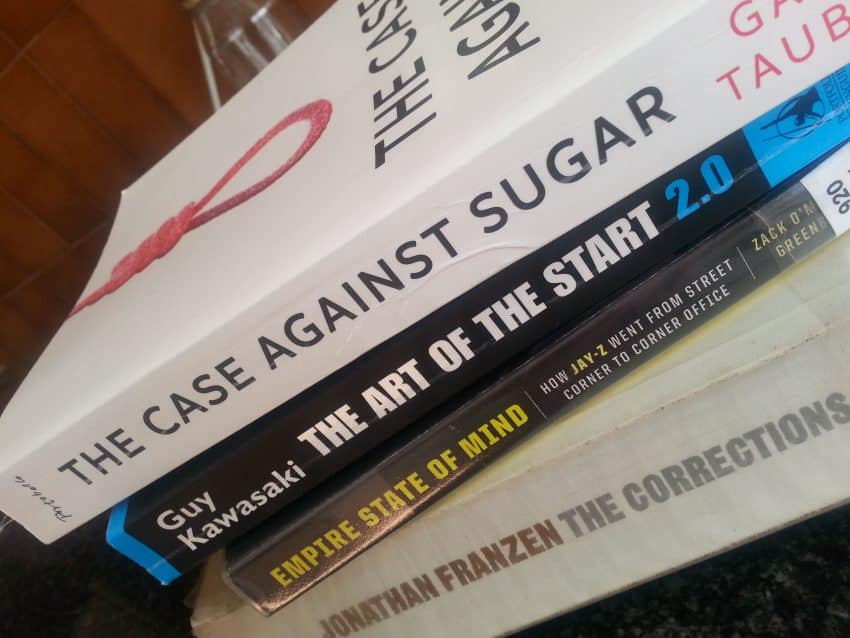
What I’m reading – The Case Against Sugar by Gary Taubes

A close-up of a stack of books including The Case Against Sugar—perfect for anyone interested in keto weight loss—alongside The Art of the Start 2.0, Empire State of Mind, and The Corrections on a dark surface.

Gary Taubes includes this statement by the U.K. chancellor of the exchequer in his latest book.

“I am not prepared to look back at my time here in this Parliament, doing this job, and say to my children’s generation: I’m sorry, we knew there was a problem with sugary drinks, we knew it caused disease, but we ducked the difficult decision and we did nothing.”

– George Osborne, U.K. chancellor of the exchequer, announcing a tax on sugary beverages, March 16, 2016

I’m a huge fan of Gary Taubes, an award-winning science and health journalist, with three Science in Society Journalism Awards from the National Association of  Science Writers, and is the recipient of a Robert Wood Johnson Foundation Investigator Award in Health Policy Research. Gary is co-founder of the Nutrition Science Initiative. When I first began my journey into low carb, healthy fat living, Gary’s books Why We Get Fat: And What To Do About It and Good Calories, Bad Calories, made it all plain for me. He has also written Bad Science: The Short Life and Weird Times of Cold Fusion as well as Nobel Dreams: Power, Deceit and the Ultimate Experiment.

Gary Taubes’ introduction

In his introduction to The Case Against Sugar, Gary says the following:

The purpose of this book is to present the case against sugar – both sucrose and high-fructose corn syrup – as the principal cause of the chronic diseases that are most likely to kill us, or at least accelerate our demise, in the twenty-first century. Its goal is to explain why these sugars are the most likely suspects, and how we arrived at the current situation: a third of all adults are obese, two-thirds overweight, almost one in seven is diabetic, and one in four to five will die of cancer; yet the prime suspects for the dietary trigger of these conditions have been, until the last decade, treated as little worse than a source of harmless pleasure.

After studying Gary’s case for the prosecution, which begins with the early domestication of sugar in New Guinea about ten thousand years ago; the discovery of sugar crystals by Indian farmers in 500 B.C.; it’s distribution to China and Japan by Buddhist missionaries; carried by the Muslim expansion into the Mediterranean countries; the further introduction by Columbus into the New World, and ends with the modern times, where Americans currently eat between 150 lbs and 170 lbs of sugar per person annually; where half a billion adults and 40 million children on the planet are obese, and diabetes is a worldwide epidemic, there can be little doubt that the hypothesis is correct.

The Case Against Sugar is a challenging read with a bibliography that extends to 35 pages and with 281 notes, but, in my opinion is well worth the effort.

Conclusion

Gary’s earlier books helped change the way I eat but The Case Against Sugar disturbs deeply. In its pages I learned:

  • That sugar and tobacco are married. Who would know that soaking Virginia and Burley in a sugar sauce would encourage inhalation of smoke from blended cigarettes, and addiction. Gunpowder and nuclear weapons have killed fewer people.
  • That sugar and slavery went hand in hand. When Muslims began growing sugar in the Middle East in the seventh century, they imported black slaves from East Africa to work the fields.
  • That the present epidemic of obesity, diabetes, gout, heart disease, cancer is probably not possible to reverse.

Published: Portobello Books, 2016

ISBN 978 1 84627 637 8

Photo credit: Myself

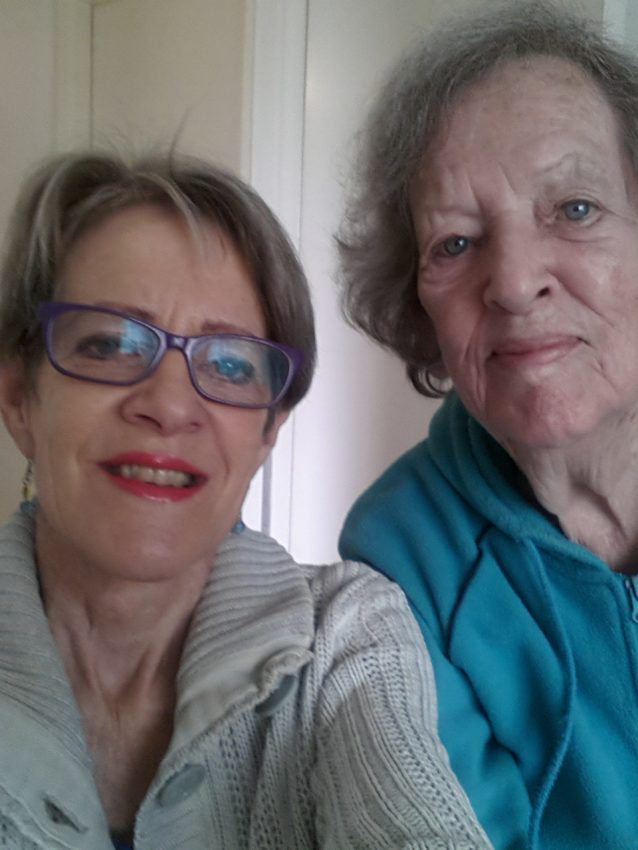
Tribute to a mother who cooked

Two older women are posing for a selfie indoors, both smiling gently at the camera. One in glasses and red lipstick, the other in a blue hoodie, sharing their happiness after discovering keto weight loss success together.

A mother who cooked is my farewell, and have a good journey message to my precious mother, Pamela.

She was a parent who unconditionally loved her children and grandchildren, her siblings and her many friends. With them she shared a wide range of interests. These included gardening, dancing, reading, needlework and learning to speak Spanish. Also swimming, playing board games such as Scrabble, embossing copper-foil fine craft work, crosswords and playing tennis.

It became necessary for Mom to support herself financially from the age of forty onwards. This she did with great flare. She investing in property which ensured a healthy cashflow for her until the end of her life. It also provided a heritage for her heirs.

Mother was a world traveller of note. Itwas all done on the salary of a civil servant. She left behind delightful scrapbooks of mementos and photographs. Each item carefully hand-labelled, faithfully recording each trip.

Best of all though, mother cooked.

Daily family meals prepared from scratch with mostly locally-sourced, recognisable ingredients. The exception would be when she daringly cooked Chinese dishes.  For these she had to use canned, imported water chestnuts and bean sprouts. These dinners were served in traditional bowls and eaten with chopsticks.

Mother cooked the slow cooking way. There was no other way in South Africa during the 1950’s and 1960’s.  This resulted in shepherds’ pie; steak and kidney pie encased in flaky pastry. Sunday roasts with Yorkshire puddings, roast potatoes, and boiled, buttered green beans or fish fried in extra-light beer batter.

Undaunted, she produced home-baked bread and Cornish pasties out of her basically equipped kitchen. Toasted cheese and tomato sandwiches were created by placing the sandwiches, buttered on the outside, between sheets of kitchen paper. hen ironed, until the bread achieved the right degree of brownness.

Coming home from school on Friday afternoons was unforgettable because this was the weekly baking day.

The tins on the kitchen shelf were full. There was Scottish shortbread; iced chocolate-coconut biscuits; loaves of banana or date bread; coconut, oat and butter crunchies; a double layer chocolate cake or a tart with an almond filling.  

Her hand-written recipe book contained entries with titles like Mrs. Harbouth’s Sponge Cake, Grandma’s Christmas Cake and Sheila Mulligan’s Fudge. Recipes were passed around between friends and family.

All of this had an enduring influence on Mom’s offspring.

I took to baking in a big way to the neglect of mastering any other kind of food preparation. This resulted in my husband being offered for dinner, slices of cherry cake……. or a toasted sandwich ! (I have improved my skills over time.)

Here is what her progeny have achieved:

  • A son who is an avid Jamie Oliver aficionado and loves to get creative and tweak and create his own versions of the recipes.
  • A daughter who is a master baker and who currently provides home-cooked meals to about 15 toddlers in her private school
  • A granddaughter who provides daily cooked-from-scratch vegan and non-vegan dinners for her family, since having retired a few years back from owning and cooking in her restaurante in Alpujarra, Spain
  • A grandson, former private chef to the Canadian ambassador in Oslo, Norway and who is currently catering for unique events which includes recently cooking dinner for the Norwegian prime minister, Erna Solberg and her entire cabinet
  • Another grandson whose preferred way to relax is to try out new Vietnamese dishes to share with his wife and children
  • A grandson who often cooks his family pancakes with compote; curries and pasta bakes, even homemade bread
  • A granddaughter whose current life in France has resulted in her learning to make beef bourguignon; cheese soufflé; octopus pie; baked camembert and more
  • Finally, an eleven year old great-grandson who eagerly delves into Jamie Oliver’s 5 Ingredients cookbook, Quick and Easy Food, making treats like orange and dark chocolate shortbread

This Mother’s gift of nourishing and loving with food has become a legacy that has been passed down through the generations.

Dear Mom, may the meals be scrumptious, may the chefs be handsome.

Now’s the time to leave the cleaning up to someone else.

Photo credit: Myself

Editing credit: Rachel Van Blerk

Prepare for weight loss

Illustration of a human stomach and intestines filled with clusters of variously colored bacteria, representing the gut microbiome and its connection to keto weight loss against a soft, abstract background.

As you prepare for weight loss recall what Hippocrates said in 400 BC: “All diseases begin in the gut.”

Gut problems as you prepare for weight loss

Hippocrates may not have been entirely right.  Current medical thinking is increasingly emphasising the importance of the intestines. There are links between digestion, mood and health. According to the Real Meal Revolution, many Banters who are heavier and insulin resistant appear to have poor gut health.

In my own case, I know this to be true as I had digestive problems for decades. Then I began to prepare for weight loss. I began to feed my gut biome and eliminate harmful substances. As a result, my depression and anxiety disappeared.  Stable, upbeat moods replaced depression and anxiety.

Here’s what we know for sure about this enormous organ:

  • It is considered to be “the second brain”
  • The small intestine is responsible for around 95% of the digestion and absorption of the food we eat.
  • The total surface area exposed to both the nutritious and harmful things we consume has been calculated to be anywhere from the size of  a badminton court to the size of a tennis court!
  • Key to the effective and healthy functioning of the small intestine is the symbiotic relationship it enjoys with our gut flora. These trillions of microorganisms line the intestinal wall. They form a vital living interface between the partially digested food on the inside and the intestinal wall on the outside.
  • Gut flora manufacture vitamins B and K, and act as an organ of the body by releasing hormones into the bloodstream. (As we have seen, hormones interact with the brain and signal the body to change its behaviour in response to a change in its environment. Irritable bowel syndrome, IBS and other bowel problems such as constipation and bloating are now thought to directly affect our mood, contributing to emotional shifts and even anxiety and depression.)
  • Our gut flora also plays an important hand in managing the body’s metabolism and it forms part of the body’s immune system by making antigens from potentially harmful bacteria that the immune system can use to ward off disease.

It is critical that it should take into account the healthy development and maintenance of your gut flora.

Avoid abrupt changes

Avoid abrupt changes, such as a wildly fluctuating diet.

The excessive use of antibiotics or the infestation of harmful bacteria, can seriously compromise this vital organ. Rebuilding and supporting the gut flora should be regarded as a foundational step to metabolic health.

For more on gut health read…….

Gluten Freedom by Alessio Fasano (Wiley, 2013) or find his videos on YouTube.

References:

Real Meal Revolution Banting 2.0 by Jonno Proudfoot and the Real Meal Revolution Team, (Burnet Media, 2016)