Similar to lasagne, cottage pie is a favourite comfort food. This is a low-carb, keto-friendly version of cattage pie.
Ingredients
For the mince
400 g beef mince
125 g streaky bacon
40 g butter
1 large onion
4 medium celery sticks
3 cloves garlic
50 g tomato paste
1 sprigs thyme
200 g button mushrooms
1 tin tomatoes
1 sprigs origanum
¹⁄₄ L beef stock
For the cauli-mash topping
1 medium cauliflower
100 g butter
2 large egg yolks
1 pinch nutmeg
About 100 g grated cheddar cheese
Method
For the mince
In a medium-sized, heavy-based frying pan, sauté the beef mince and streaky bacon in the butter until golden brown.
Finely chop the onion and roughly chop the celery sticks.
Once the mince has browned remove the meat, leaving the fat in the pan, and add the onion and celery.
Sauté the onion and celery in the fat until golden brown. Add the minced garlic and sauté until aromatic.
Return the mince to the pan. Add the tomato paste and stir until a dark sediment collects on the base of the pot (this sediment gives the mince an amazing roasted flavour).
Add the beef stock, chopped thyme, button mushrooms and tinned tomatoes and simmer on a low heat for about an hour to cook and reduce.
Add the chopped origanum and season to taste with salt and pepper.
For the cauli-mash topping
Steam the cauliflower until it goes mushy.
Place the cauliflower in a food processor and purée until smooth.
While the blender is running, add the egg yolks.
Add in the butter, one knob at a time until it has melted and the mixture is smooth.
Season with nutmeg to taste.
To make the cottage pie
Fill a lasagne/pie dish with the mince and smooth it out.
Top it with the cauliflower purée.
Top with the grated cheddar cheese or just leave with the cauli-mash topping only.
Place it under the grill for 15 minutes until golden brown.
Cook’s Tip
This recipe serves four people and can be made ahead of time.
I prefer to use my own homemade stock in the recipe.
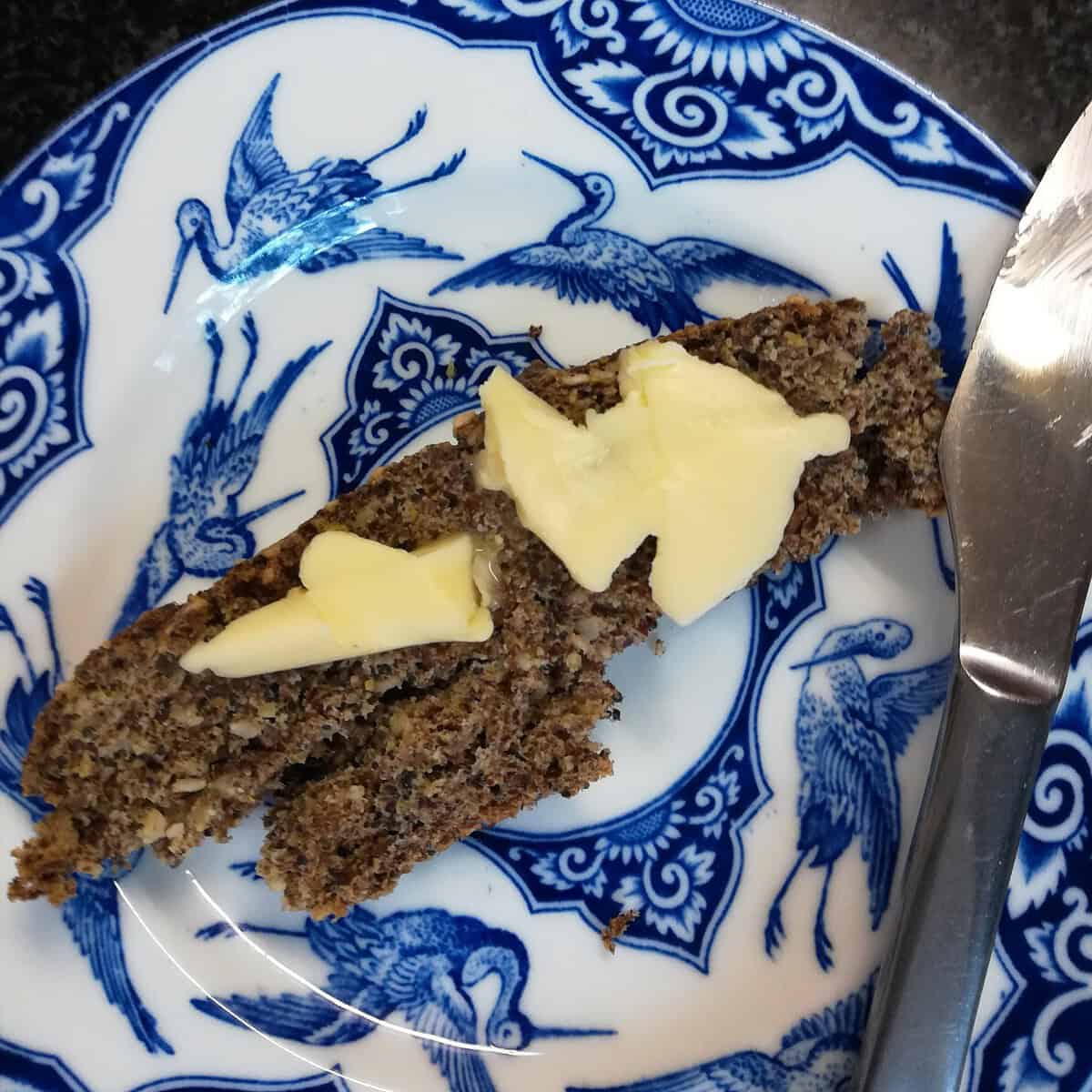
I’ve baked many different low carb breads but almond and poppy seed bread is the quickest and easiest to make.
Almond and poppy seed bread
It has 5.3 grams carbohydrate per slice.
It keeps well in the fridge. Or separate the slices with baking paper and freeze them in a plastic bag or container.
These breads all taste much better toasted than they do raw.
Ingredients
4 extra large eggs
3 tbsp water
1 cup golden flax seeds (grind them yourself in a coffee grinder)
¹⁄₂ cup ground almonds
1 tsp baking powder
1 teaspoon salt
5 ml caraway seeds
5 millimeter xylitol
¹⁄₂ tsp xanthan gum
2 tbsp poppy seeds
¹⁄₄ cup sunflower seeds
¹⁄₄ cup flaked almonds
Method
Preheat the oven to 180°C / 350°F.
You must buy whole golden flax seeds and grind them yourself otherwise the recipe will not work.
Grease a small loaf tin and also line it with baking paper as this bread sticks to the pan.
Whisk together the eggs and the water in a bowl until well combined.
Place the rest of the ingredients in another bowl and stir to combine.
Fold the eggs into the dry ingredients and mix well.
Pour the mixture into the greased loaf tin and bake in the oven for 30 – 35 minutes.
Allow to cool and serve.
This loaf will last for a few days in the fridge.
Cook’s Tip
Toasted cheese and tomatoes are epic! Poppy seeds usually go pretty well with a squeeze of lemon, so I reckon go toasted with lashings of butter and avo!
Consuming fermented foods such coconut kefir, and drinks like kombucha, has been widely reported for centuries to be of benefit. This is advocated by doctors and health specialists globally. Also of benefit to the gut biome are foods like papaya that are rich in digestive enzymes.
I recommend one portion of either a broth or a fermented food every day; the latter can be either a half cup of a fermented drink or a tablespoon of fermented vegetables. it will be a bit weird to start. But once you’ve done it for a day or two, it will grow on you and you should start craving it.
Coconut Milk Kefir
This takes only 12 hours to ferment, Unless you prefer a more sour taste. Then you simply leave it to ferment for longer until the taste appeals to you.
So, how do you make kefir at home?
Get kefir grains from your local health food store.
Using only plastic or wooden utensils, place the grains into a glass or plastic container.
Pour over a 400 ml tin of coconut milk. Stir to combine the kefir grains and the coconut milk.
Leave at room temperature for 12 hours.
Remove the kefir grains and place in a plastic container, covered with some of the new kefir. Place in the fridge where it will become dormant until you make your next batch.
Store your new batch of kefir in the fridge where it will become thicker the longer you leave it there.
Coconut kefir with papaya – high in digestive enzymes
Other foods that contain digestive enzymes are:
Avocado oil
Macadamia oil
Extra virgin olive oil
Coconut oil
Pineapple
Conclusion
Make a point of having fermented foods or drinks and foods rich in digestive enzymes several times a week.
Grilled sardines may not enjoy the popularity of other fish, but they’re one of the most nutrient-dense foods on the planet.
What are they?
These small, nutritious cousins of the herring family are eaten whole and provide plenty of omega-3 fatty acids.
They’re named after the Italian island of Sardinia, where records show that they were caught there as early as the 15th century.
Sardines are extremely nutritious and contain almost every major nutrient
Have a look at this list of 9 good reasons to eat sardines:
Sardines are a rich source of bio-available calcium which is an essential mineral for skeletal and dental health. Vegan dieters and those who follow a strict paleo, dairy-free diet, set themselves up for calcium deficiency.
One of the best health boosts that eating sardines can provide, are essential Omega 3 fatty acids, EPA (eicosapentaenoic acid) and DHA (docosahexaenoic acid). These provide anti-inflammatory protection against many chronic diseases.
Sardines are incredibly rich in Vitamin D. Vitamin D is a hormone rather than a vitamin. The ultraviolet rays of the sun reacting on our skin produce Vitamin D. For those living in the Northern hemisphere the winters are dark and long. It is essential to obtain Vitamin D from a good food source.
If we are looking for a way to increase our protein intake, then sardines are the answer. The essential amino acids in protein are needed synthesize hormones, grow and repair body cells and they also make us feel satisfied after eating.
Selenium is a mineral that acts as an antioxidant in the body. It also plays a role in DNA repair and the proper functioning of the endocrine and immune systems.
Sardines contain an insignificant amount of mercury, and they are among the cleanest fish in the ocean.
Sardines are affordable to everyone.
Both fresh and canned sardines are very convenient, nutritious and good for health.
When we take a total view of everything these fish provide, it is even more impressive;
Sardines provide more calcium than a cup of whole milk.
An alternative source of selenium to brazil nuts.
The same omega-3 fatty acids as mackerel and salmon.
A protein content almost equivalent to chicken breast.
There have been thousands of peer-reviewed articles indicating the benefits of turmeric and curcumin, and various studies report that curcumin is more effective than some prescription drugs at tackling inflammation.
Why turmeric?
Massive anti-inflamatory and anti-cancer properties
Aids digestion
Helps to reduce blood-sugar levels, thus lowering the risk of diabetes and insulin resistance.
Associated with the relief of symptoms of depression, arthritis, high cholesterol and chronic pain
How much?
Try to add turmeric to you diet at least three times a week.
A regular turmeric capsule is also an option.
Disclaimer: Curcumin may interfere with anti-coagulants like Clopidogrel, Aspirin and Warfarin. It also can affect medications such as non-steroidal, anti-inflammatory drugs. If you are taking any chronic medications or suffer from any chronic medical conditions, speak to your healthcare provider before introducing large amounts of turmeric into your diet.
Making Golden Shake
Have your Golden Shake cold if making it with kefir (so as not to kill off the bacteria), or warm or cold if you’re making it with coconut milk.
Ingredients
1 cup kefir (cold only) or coconut milk (warm or cold)
1/2 teaspoon turmeric
1/4 teaspoon Ceylon cinnamon
1 teaspoon chia seeds
1/2 teaspoon maca powder
a crack of black pepper
a pinch of crystal salt
1/2 teaspoon honey (optional)
Method
Warm the milk on the stove if you’re making the warm version.
Combine all the ingredients and blend, in descending ease of use, in a Nutribullet or with any other blender.
Golden shake with turmeric, curcumin, maca powder, cinnamon, salt and black pepper.
My best way to enjoy turmeric
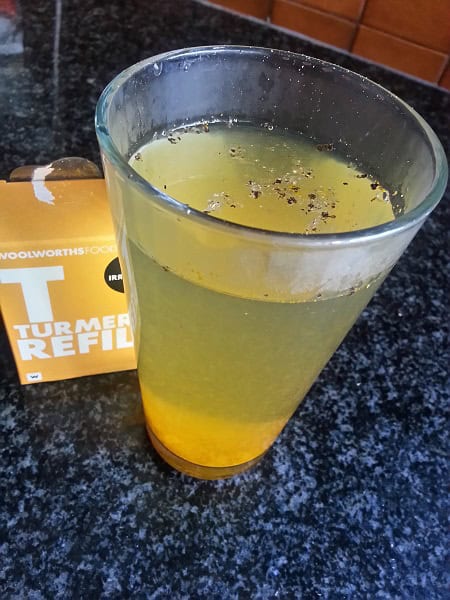
In a glass of warm water, mix in a tablespoon of fresh lemon juice, half a teaspoon of turmeric and a crack of black pepper.
– Linda Joyce Forristal, Western Price Organisation
Many sources believe that raw fermented foods are Foods beneficial to the digestive system. by increasing the healthy flora in the intestinal tract or creating the type of environment for them to flourish.
Sauerkraut and it’s juice are traditional folk remedies for constipation.
Fermentation actually increases nutrient values in the cabbage, especially Vit C.
Fermented foods are also said to facilitate the breakdown and assimilation of proteins.
They have a soothing effect on the nervous system.
Best of all, homemade, crunchy sauerkraut is a delicious addition to meals, especially those containing fatty meats.
Making sauerkraut at home
This recipe will make 1 to 1 1/2 quarts (0.95 – 1.425 litres)
Here’s what you will need:
Ingredients
Head of cabbage weighing 3 pounds (1.362 kilograms)
1 1/2 tablespoons kosher salt
A tablespoon of caraway seeds (optional, for flavour)
Equipment
Cutting board
Chef’s knife
Large mixing bowl
2-quart (2 litre) wide-mouth jar
Canning funnel
Smaller jar that fits into the opening of the large jar
Clean weights for weighing down the small jar
Cloth for covering the jar
Rubber ban for securing the cloth
Instructions
Clean everything thoroughly. This includes your hands.
Slice the cabbage as thinly as possible for making sauerkraut.
Slice the cabbage as thinly as possible, discarding the outer leaves and the core.
Combine the cabbage with the salt using your hands and massage it well until liquid forms in the bottom of the bowl.
Combine the cabbage and the salt in the large mixing bowl.
Sprinkle the salt over the cabbage work the salt into the cabbage by massaging and squeezing the cabbage with your hands.
Gradually the cabbage will become watery and limp, a bit like coleslaw. Keep this up for at least 10 minutes.
Massage the caraway seeds in.
Pack the cabbage and the liquid into the large glass jar. Push it down hard with your fist.
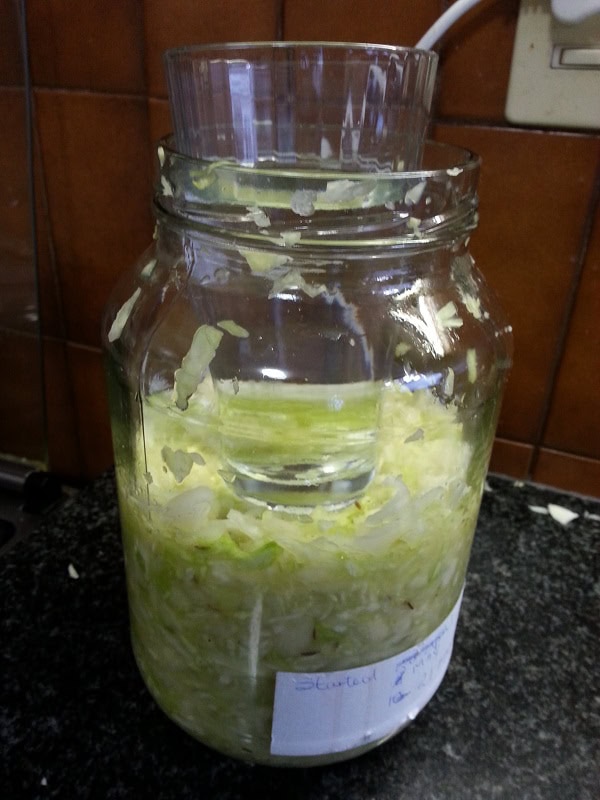
Weigh the cabbage down using the small jar that you have filled with weights to keep the cabbage submerged beneath the liquid. I also use my sterilized potato masher implement to push the cabbage beneath the water.
Cover the jar with the clean cloth that is held in place with the elastic band. This will keep dust and insects away while allowing air to circulate into the jar.
Press the cabbage down every few hours. Fermentation starts to happen.
Within 24 hours, bubbles will appear in the liquid covering the cabbage. This is the start of fermentation that will result in sauerkraut.
Within 24 hours, or sooner, you will see bubbles which will tell that fermentation has begun. This will take 3 to 10 days.
Keep it away from direct sunlight and at a room temperature of 65 – 70 degrees F (18 – 21 degrees C).
You may see bubbles coming through the cabbage, foam on the top, or white scum. These are all signs of a happy, healthy fermentation process. The scum can be skimmed off during fermentation or before refrigerating.
If you see any mould, skim it off immediately and make sure your cabbage is fully submerged; don’t eat mouldy parts close to the surface, but the rest of the sauerkraut is fine.
I know that my sauerkraut is done when it tastes and smells like sauerkraut.
Store sauerkraut for several months and even longer if refrigerated. As long as it still smells and tastes good, it will be.
Low-carb, keto friendly, eggs are probably the most nutritionally complete food in the world. If we take a look at the nutrients in just one egg, it is obvious that eggs are the ultimate vitamin and mineral supplement. I never eat a single egg but rather a couple at a time.
Here’s what one egg contains:
Selenium: 23% RDA
Riboflavin: 14% RDA
Vitamin B12: 11% RDA
Phosphorus: 10% RDA
Pantothenic Acid: 7% RDA
Folate: 6% RDA
Iron: 5% RDA
Vitamin A: 5% RDA
Vitamin B5: 5% RDA
Zinc: 4% RDA
Vitamin B6: 4% RDA
Vitamin D: 4% RDA
Calcium: 3% RDA
Copper: 3% RDA
Eggs also provide the most bio-available protein of all food and they’re high in healthy fats.
Lutein and zeaxanthin are two of the many anti-oxidants found in eggs. These protect our eyesight and reduce the risks of macular degeneration.
Choline is present eggs and protects against adverse conditions such as diabetes and DNA damage.
Eggs are affordable to nearly every food budget.
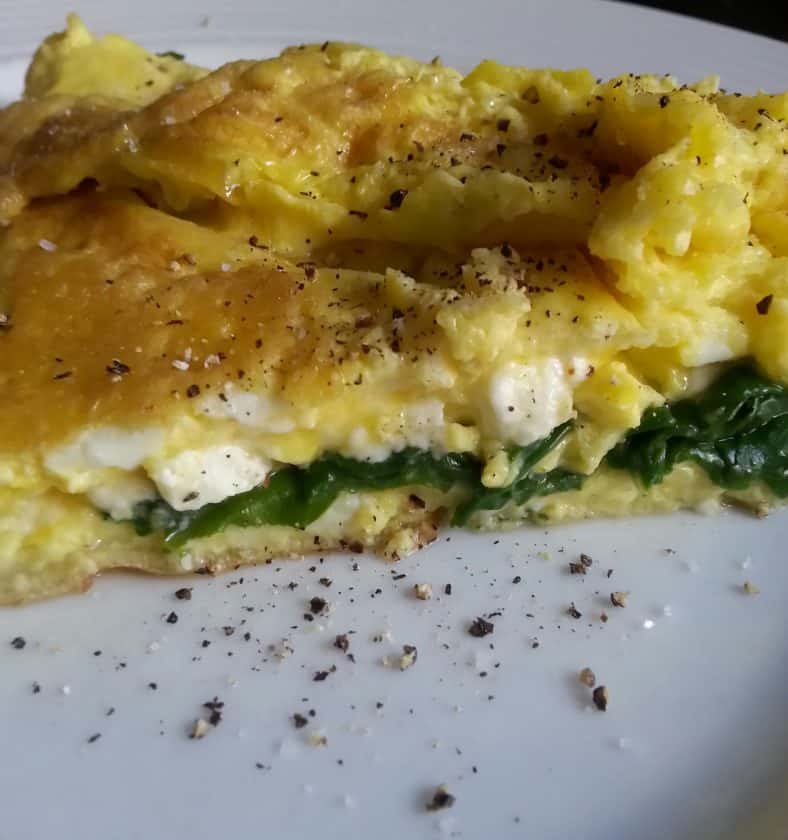
Anyone can learn to cook eggs, such as this simple omelette cooked in coconut oil and filled with steamed spinach and feta cheese. The options are endless!
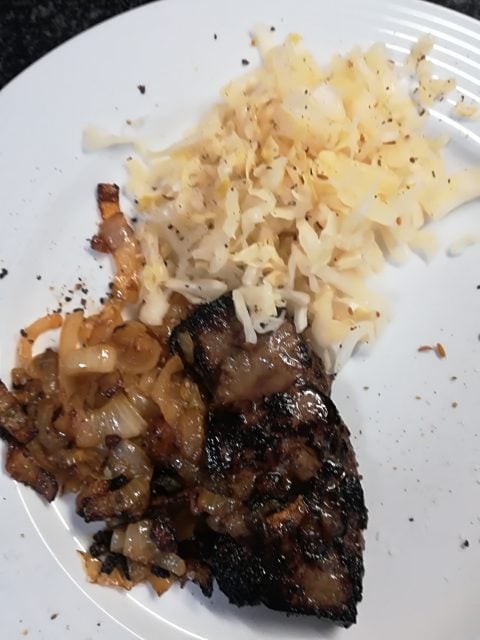
Crammed full of nutrients, if a “superfood” truly exists, then we have to give that recognition to beef liver. All beef, pork or chicken livers, are incredibly rich in protein, vitamins and minerals.
The nutritional of 100 grams of beef liver are as follows:
Vitamin B12: 1176% RDA
Copper: 714% RDA
Vitamin A: 634% RDA
Riboflavin: 201% RDA
Niacin: 88% RDA
Pantothenic Acid: 71% RDA
Folate: 63% RDA
Selenium: 52% RDA
Phosphorus: 50% RDA
Iron: 36% RDA
Zinc: 35% RDA
Manganese: 18% RDA
Potassium: 10% RDA
A weekly meal of liver is more than enough to ensure adequate micronutrient intake. As liver contains a high amount of Vitamin A, it is possible to experience toxicity if eaten too often.
Rinse the liver under cold water and soak it in milk for 30–60 minutes to mellow the flavor. Drain and pat dry. Season with salt, pepper, and garlic powder if using.
In a large skillet, heat 1 tablespoon of oil or butter over medium heat. Add the onions and sauté until golden and caramelized, about 10–12 minutes. Remove onions and set aside.
Add the remaining oil to the skillet. Increase heat to medium-high and add the liver in a single layer. Cook for 2–3 minutes per side until browned but still slightly pink in the center to avoid toughness.
Return the onions to the pan, stir gently, and cook together for 1 more minute. Remove from heat and garnish with fresh parsley if desired. Serve warm with mashed potatoes or crusty bread.
There’s no need to miss bread on your keto diet. If you’re craving a simple slice of toast with butter or avocado, I can show you how to make your own low-carb keto bread.
Not only is this bread recipe quick to make, but it can be batch prepped, frozen, and ready to enjoy without ever turning on the oven.
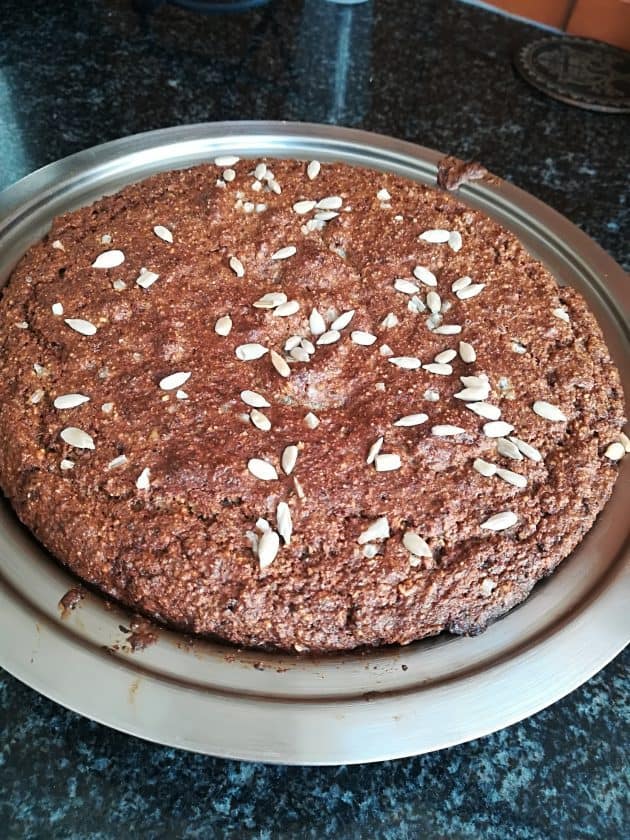
Fiona’s low-carb keto bread that works! This delicious, easy-to-make, coconut and almond flour bread is delicious and toasts well. Slice and freeze it the same day that you make it.